Get Full Government Meeting Transcripts, Videos, & Alerts Forever!
Get email alerts on the Career Academy topic
No spam. Unsubscribe anytime.
State Board approves New Hampshire Career Academy charter to offer two‑year accelerated pathway
Summary
The State Board approved the New Hampshire Career Academy charter, a tuition‑free two‑year program that aims to let seniors earn a high‑school diploma plus an associate degree through embedded community‑college coursework; board recorded no conditions beyond routine oversight.
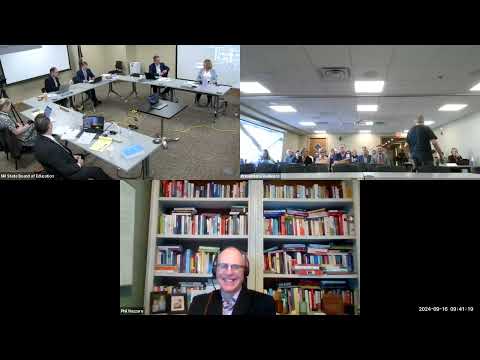
The State Board of Education voted Sept. 16 to approve the charter application for the New Hampshire Career Academy, a proposed tuition‑free public charter that pairs high-school seniors with community‑college coursework so students can earn a high-school diploma and an associate degree or vocational certificate in two years.
Presenter Patrick Alnara told the board the school plans to admit students who are roughly senior standing (about 15 credits) and to work with the New Hampshire Community College System to host students on college campuses. "New Hampshire Career Academy will strive to provide New Hampshire high school students with a tuition free high school diploma and college degree," Alnara said, describing partnerships with Great Bay, Manchester Community College and NHTI in Concord.
Alnara said the school projects about 78 students in year one (roughly 25 per partnering campus) and envisions growth if successful. The applicants said they will evaluate admission on a case-by-case basis, and there is no fixed hard cap but enrollment will be constrained by college program availability.
Board members asked follow-up questions about admissions thresholds, transferability of credits and program logistics. Staff said in‑state transfer pathways already exist between community colleges and New Hampshire’s public four‑year institutions and that the Career Academy planners expect credits to move within the state system. The board moved, seconded and approved the application on a voice vote; members invited the school to return with updates as the program develops.
The applicants indicated an intended opening in 2025 and told the board they will continue coordinating with the community‑college chancellor and presidents as they finalize sites and program details.