Bowling Green amends private-lot towing rules after lengthy public comment, sets fee caps and new signage requirements
Loading...
Summary
After hours of public comment from students, residents and property owners, Bowling Green commissioners voted on first reading to amend the city's towing and immobilization ordinance, capping private-lot towing and booting fees, tightening signage standards and removing an after-hours gate fee amid pending litigation.
Bowling Green commissioners on Feb. 17 moved on first reading to amend the city's towing and immobilization ordinance after an extended public comment period in which students, residents and business owners described rapid booting and tows, unclear signage and intimidating encounters with enforcement staff.
City Attorney Hillary Hightower, speaking after a closed-session review of pending litigation, told the commission the recommended amendment would remove the after-hours gate fee, set the private-property drop/tow fee at $75, set the boot removal fee at $50, cap credit-card surcharges at $5, require 18-by-24-inch signs visible at night and add a prominent 3-inch bold statement that the lot is a "tow or boot zone." Hightower also said booted vehicles could not be towed unless they met the definition of an abandoned vehicle.
The measure was moved by Commissioner Perrigan and seconded by Commissioner Dana Beasley Brown. A roll-call vote recorded Perrigan, Bailey, Beasley Brown, Hill and Mayor Alcott as voting "yes" on the ordinance amendment on first reading; the mayor said the item will return on the next agenda for further readings as required.
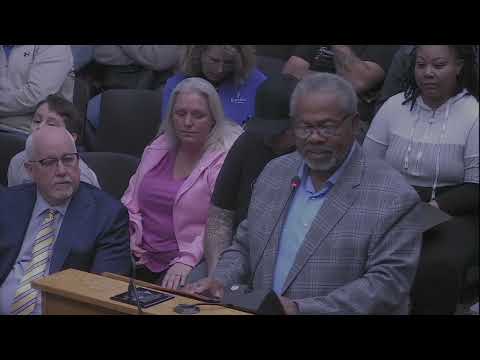
Public commenters described multiple incidents in which vehicles were booted or towed minutes after arrival and said signage was often small, unlit or mounted on tree trunks and therefore difficult to see at night. "This was more than a parking issue. It was a moment where a group of young women felt intimidated and unheard," said Molly Ann, a WKU student who described a January incident in which a friend paid a $110 card fee after arriving at 10:03 p.m. and finding a boot three minutes later.
Other speakers described encounters they said involved armed security personnel. "During our interaction, the taser was drawn and pointed at my chest," said Gary Shallert, recounting a January incident involving his teenage son; he urged the commission to require pole-mounted, illuminated signage close to the spaces being enforced.
Not all commenters opposed the ordinance changes. Property managers and local towing representatives said that clear signage and predictable rules are important but warned that fee caps could affect contracts and the availability of private towing services. "If we cap it and we lose our contract, that also takes away about $33,000 a year," said Angel Delois, who manages property near WKU and uses a local towing company under contract.
Hightower told the commission the city had been served with a lawsuit related to towing practices and recommended commissioners refrain from responding during the public comment period; staff later moved into closed session to discuss pending litigation under Kentucky open-meetings law. When the commission resumed public session, Hightower read the proposed amendment language before the commission voted to accept it on first reading.
What happens next: the amendment was adopted as a first reading (nonbinding) and will return for the next required reading(s). If the ordinance proceeds, property owners, towing companies and residents will need to follow the new signage and fee rules as written; the city noted enforcement and implementation details will be handled through staff processes and any legal challenges pending in court.
(Reported from the Feb. 17, 2026 meeting of the Bowling Green Board of Commissioners. Quotes and policy changes are taken from on-the-record remarks during the meeting.)