
Trainer urges youth‑justice workers to partner with tribes, follow ICWA protocols
Get AI-powered insights, summaries, and transcripts
Subscribe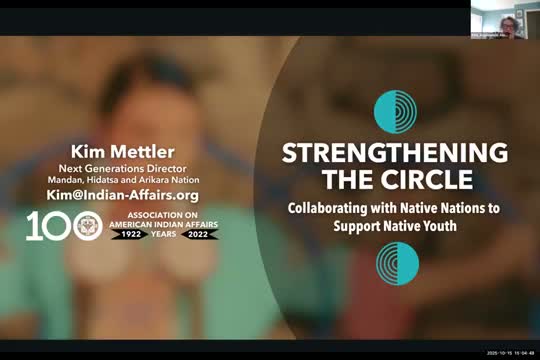
Summary
Kim Mettler of the Association on American Indian Affairs told webinar attendees that identifying Native youth and collaborating with their nations can reduce justice system disparities, and she outlined practical steps and directories for contacting tribes under ICWA.
Kim Mettler, a trainer with the Association on American Indian Affairs, told a virtual audience that stronger collaboration between local agencies and Native nations is essential to reduce the disproportionate involvement of Native youth in justice systems.
"Native youth are 4 times more likely to be detained than their white counterparts," Mettler said, citing national research she named in the presentation. She framed the problem as rooted in historical trauma — including forced relocation, boarding schools and adoption programs — and argued that trauma‑informed, culturally appropriate services can break cycles that lead to system involvement.
Mettler said the Indian Child Welfare Act (ICWA) is not limited to child welfare files: "It applies when a youth is placed in foster care or other out‑of‑home care because of a status offense," she said, and urged youth‑justice staff to treat ICWA obligations as both a legal requirement and a practical pathway to culturally appropriate placements.
The presenter walked through concrete steps agencies can take: ask early whether a youth has tribal citizenship or a tribal ID, document connections such as prior tribal court involvement or Indian Health Service use, and contact the nation to verify eligibility and to provide formal or informal notice depending on case type. She recommended using federal directories, including the Bureau of Indian Affairs’ ICWA‑designated agents list, to find contact information for nations.
Mettler stressed that questions about identity must be handled with sensitivity. "You want to explain why you're asking the question," she said, and recommended building rapport with families before pressing for enrollment or citizenship details.
In a live exchange, Stephanie Gomez, identified herself as "the Indian Child Welfare case manager for the Confederated Tribes and Bands of the Yakama Nation," and urged practitioners to reach out both to the tribe a family claims and to the tribe for the land where the family resides because the reservation tribe may have authority to assume jurisdiction.
On operational tips, Mettler advised agencies to be flexible about how they work with a nation: "Listen," she said. "Build that relationship before you actually need the relationship." When multiple nations claim a case, she recommended patience, clear communication, and setting shared protocols about roles, information‑sharing channels and decision priorities.
Mettler also shared resources in the chat, including the Association on American Indian Affairs’ practice guide Strengthening the Circle and BIA guidance on ICWA implementation. She invited attendees to contact her directly for follow‑up and technical assistance.
The webinar concluded with Mettler warning that relationships can be fragile: she described a San Diego County example in which a personnel change and a perceived disrespect toward a tribal elder undermined decades of trust and a standing memorandum of understanding.
The virtual session closed with the host directing attendees to program details in chat and upcoming sessions the next day.