
Committee narrows campaign‑finance reporting changes, raises small‑race threshold to $1,500
Get AI-powered insights, summaries, and transcripts
Subscribe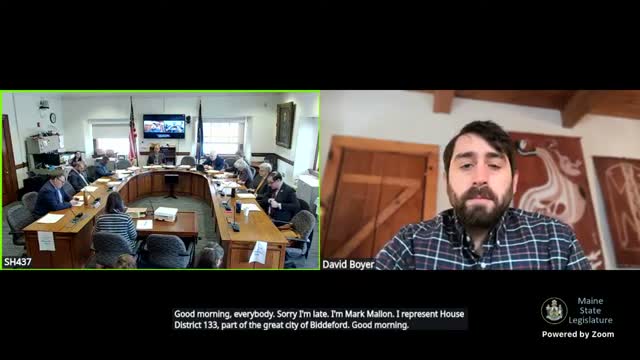
Summary
The Joint Standing Committee advanced LD 2000 with an amendment that raises the reporting threshold for state representative and municipal candidates to $1,500 and keeps most independent‑expenditure filings at 24 hours while allowing candidates a 48‑hour window; the measure passed the committee roll call.
The Joint Standing Committee on Veterans and Legal Affairs on Monday advanced LD 2000, an agency bill that rewrites several last‑minute campaign‑finance reporting rules, amending the proposal to raise reporting thresholds in smaller races.
The committee adopted an amendment that sets the reporting threshold for state representative and municipal candidates at $1,500 (up from the prior $1,000), aligns municipal and state‑rep thresholds, and preserves a 24‑hour disclosure window for independent expenditures in the last six days of an election while allowing candidates a 48‑hour reporting window. Representative Mallon moved the amendment and Representative Chapman seconded; the clerk recorded 12 votes in favor with one member absent and the motion prevailed.
Why it matters: Miss Olsen, the Legislature’s analyst on elections, told members the changes are intended to reduce confusion and late filings by harmonizing different reporting periods and raising what the bill calls "large contribution" thresholds so routine small transfers near election day will not trigger urgent filings. Jonathan Wayne, executive director of the Maine State Ethics Commission, said the working group behind the bill aimed to give filers "a little more breathing room" and to simplify compliance for candidates, party committees and PACs.
Key details: The bill: raises some thresholds used to trigger short‑notice reporting in the last 13 days before an election; changes certain reporting windows from 24 hours to 48 hours for candidate filings; raises the independent‑expenditure threshold in the draft to $1,000 per candidate; and contains an unallocated statutory direction for the Ethics Commission to adjust rules for independent‑expenditure reporting during the 60‑day pre‑election window.
Debate and tradeoffs: Several members, including Senator Timberlake and Representative Boyer, warned that raising thresholds could reduce near‑election transparency, especially for smaller contests. Representative Mallon and others argued that small‑race budgets make a $1,000 trigger less informative and that modest increases would reduce inadvertent late filings. On independent expenditures, the committee preserved transparency for late, potentially race‑impacting spending by keeping the 24‑hour requirement for IEs in the final six days while allowing candidate filings more time.
What’s next: The committee moved LD 2000 "ought to pass as amended." The measure will be carried forward with the committee’s revision to the threshold amounts and the reporting‑window distinctions captured in the amendment.