Get Full Government Meeting Transcripts, Videos, & Alerts Forever!
Get email alerts on the WIC Funding topic
No spam. Unsubscribe anytime.
Connecticut to fund WIC benefits from state reserves during federal shutdown
Summary
Governor Ned Lamont and state health officials said Connecticut will use state rainy day funds to continue WIC benefits for roughly 52,000 residents while awaiting federal reimbursement; state leaders emphasized program continuity and described local services and a Healthy Bodegas pilot in Hartford.
Connecticut officials announced the state will continue benefits under the Special Supplemental Nutrition Program for Women, Infants, and Children (WIC) during the ongoing federal shutdown, funding the program from state reserves while anticipating future federal reimbursement.
Dr. Nisha Juthani, commissioner of the Connecticut Department of Public Health, said the state WIC system serves about 52,000 people statewide — roughly 30,000 children, 11,000 infants and 11,000 women — and that “it costs $200,000 a day to run this program and to feed people who are in this program.”
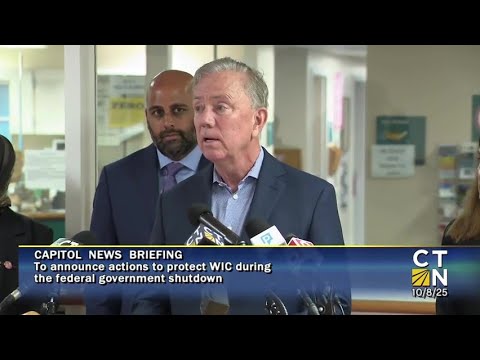
The moderator at the Hartford event announced the state commitment: “our state will continue WIC benefits, and we will fund WIC through our state reserves.” Governor Ned Lamont reiterated that position, saying Connecticut will maintain benefits “until the federal government gets this act together.”
Why it matters: WIC provides targeted nutritional assistance and breastfeeding support for low-income pregnant women, infants and children under 5. State officials framed Connecticut’s action as a stopgap to prevent interruptions in benefit access and to avoid immediate harm to infants and mothers while the federal funding lapse continues.
How the program will operate now: Dr. Juthani said benefits and appointments have continued without major disruption and that partners on the ground are maintaining services. State officials said the federal government is expected to reimburse Connecticut when federal operations resume, but acknowledged that reimbursement timing and certainty are not guaranteed. A questioner asked, “What happens if they don't?” Governor Lamont responded, “We anticipate the federal government will reimburse us, but you're never quite sure.” Dr. Juthani added that, absent state backing, the health department would likely have to issue stop-work orders at some point.
Local services and pilot programs: Ebony Jackson Shaheed, director of Hartford Health & Human Services, urged residents in need of prenatal or postnatal support to visit the Hartford WIC office at 131 Coventry Street or hartford.gov for information. Shaheed described a Hartford “Healthy Bodegas” pilot to expand access to produce and healthier options in neighborhood bodegas and said Waterbury had completed a similar pilot.
Limits and scope: Governor Lamont was asked whether the rainy day fund might be used to pay other federally paid workers, such as air traffic controllers; he said the state would not cover all federal pay gaps and emphasized the state's capacity is limited to near-term, state-subsidized needs. Officials said Connecticut will absorb near-term costs (the commissioner cited $200,000 per day) and pursue federal reimbursement afterward.
Next steps: No legislative vote was recorded at the event; the announcements represent executive and administrative decisions to continue funding WIC from state reserves while monitoring federal actions and working with local partners to maintain service delivery.