Get Full Government Meeting Transcripts, Videos, & Alerts Forever!
Get email alerts on the Training Zoning Masterplan topic
No spam. Unsubscribe anytime.
SmithGroup planner gives zoning and master-plan refresher to Ferndale commissioners
Summary
Kathleen Duffy of SmithGroup led a training for the Planning Commission covering the Planning Enabling Act, zoning fundamentals, site-plan review, variances, conditional rezonings, RRC certification, and conflict-of-interest best practices. Commissioners asked about food-truck regulation and application expirations.
Kathleen Duffy, an urban planner with SmithGroup, led a training session for the Ferndale Planning Commission that reviewed statutory foundations, the role of the master plan, zoning fundamentals and procedural best practices.
Duffy summarized statutory authority under the Michigan Planning Enabling Act and the Michigan Zoning Enabling Act and described the six-year capital improvement plan as an implementation tool for the master plan. On the obligations of decision-makers she said, “If the standards in your ordinance have been met, you must approve the request,” urging commissioners to tie decisions to clear ordinance standards and documented findings of fact.
The training covered site-plan review basics, permitted uses versus special land uses, planned unit developments (PUDs), conditional rezonings, nonconformities and the limited circumstances for use variances. Duffy recommended using ordinance text amendments where recurring variance requests indicate systemic issues. She also discussed Redevelopment Ready Communities (RRC) processes and the value of a documented CIP when seeking grants.
Duffy emphasized procedural formality: avoid ex parte contacts, follow public-hearing decorum, and document recusal and conflict-of-interest determinations (including leaving the room when appropriate). She suggested that recused members should remove themselves from the dais and ideally leave the room so their presence does not influence deliberations.
In Q&A, commissioners asked for examples of how other communities regulate food trucks on private property; Duffy suggested many places treat food trucks as a temporary use or via business permitting and offered to share examples. Commissioners also asked about expiration language for site plans and applications; Duffy recommended adding explicit expiration provisions if absent.
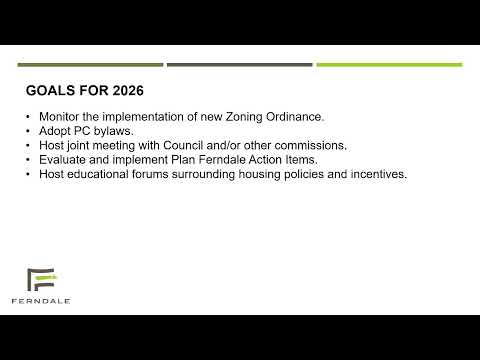
The training preceded administrative business, where staff reviewed the draft annual report and recent development reviews. Commissioners thanked Duffy for the refresher and raised next steps for bylaws and monitoring the recently adopted zoning ordinance.