Get Full Government Meeting Transcripts, Videos, & Alerts Forever!
Get email alerts on the Noise topic
No spam. Unsubscribe anytime.
Takoma Park council advances noise ordinance after detailed debate over leaf blowers and enforcement
Summary
Council held a first reading of proposed changes to Chapter 14.12 (noise), debated witness/attestation rules and enforcement roles, and approved the first reading with clarifications requested from the city attorney ahead of second reading.
The Takoma Park City Council held the first reading Feb. 18 of a revised noise ordinance (Takoma Park Code Chapter 14.12) that clarifies enforcement procedures and evidence requirements. Director Deb McNally summarized edits that remove a strict photographic‑evidence requirement and retain the possibility of issuing citations based on two witnesses or other methods such as a code enforcement officer witnessing a violation.
Council members spent substantial time probing how complaints would be adjudicated, especially for leaf blower complaints and nuisance noise. Council member de Bala and others sought clarity on whether one of the two required witnesses might be a code enforcement officer and whether the change would leave residents in multifamily buildings—where police typically respond—without recourse. City staff said code enforcement could adjudicate two‑party complaints for properties (but not routine entry into multifamily units) and that police would continue to handle in‑building disturbances.
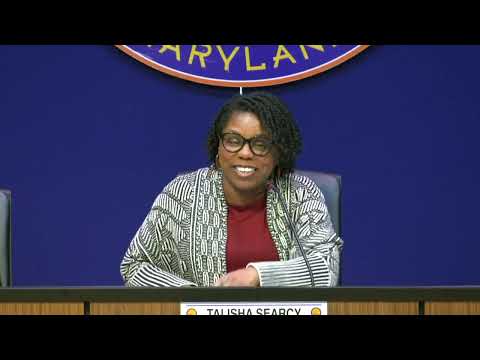
A motion to table the first‑reading vote failed on a 3–3 split with two abstentions. The council then approved the first reading (Landman Abstain; Dibala Yes; Schlegel Abstain; Gilbert No; Hansack Yes; Wesselak Yes; Mayor Searcy Yes). The mayor and staff said the city attorney would make clarifying edits before the ordinance returns for second reading.
Council members requested clearer language surrounding the role of code enforcement officers as potential witnesses and the geographic scope of the two‑party complaint process; staff agreed to revise the draft for second reading.