
Parlier council adopts resolution backing federal Dignity Act after local presentation
Get AI-powered insights, summaries, and transcripts
Subscribe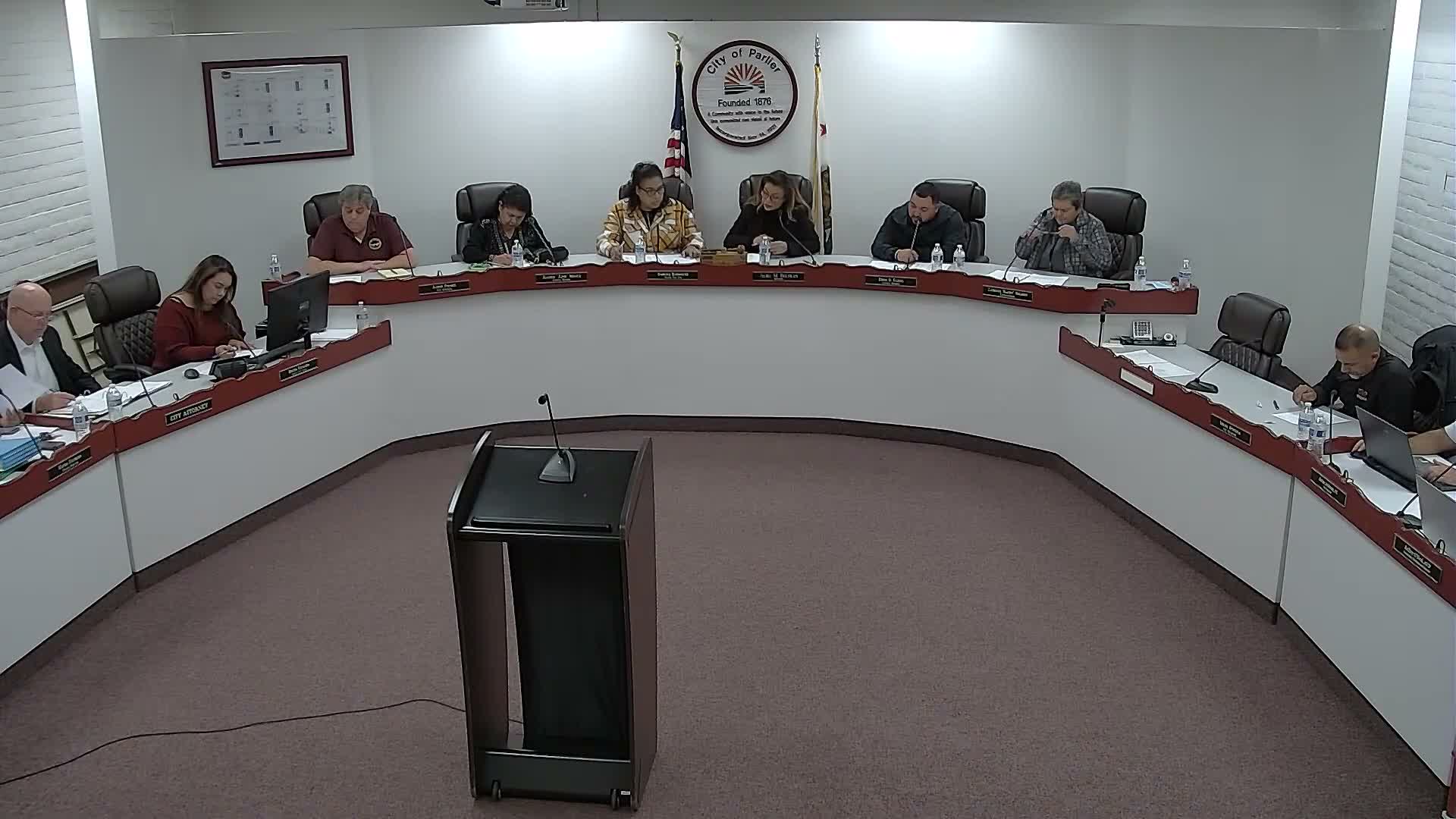
Summary
Parlier City Council voted to adopt a resolution supporting H.R. 4393, the Dignity Act, following a presentation by Manuel Acuna outlining the bill's proposed work-authority permit, fees and implementation steps; council recorded the motion as passed by voice vote.
Parlier City Council voted on Feb. 19 to adopt a city resolution endorsing H.R. 4393, the Dignity Act, after a detailed presentation from community advocate Manuel Acuna about the bill's provisions and local outreach efforts.
Acuna, introduced in the meeting record as being from Nessie Farms, told the council the Dignity Act would create a renewable work card — described in his presentation as a seven-year "Dignity Card" — that would allow people working in U.S. industries to apply and work without leaving the country. "You will be able to work, travel outside of the United States," Acuna said, describing a program he said would include biometrics, medical checks and other screening similar to prior federal legalization programs. He described the bill as the product of broad stakeholder work, saying about 168 organizations and industry representatives had engaged in the coalition backing the measure.
Acuna also outlined provisions he said were in current drafts: an initial restitution penalty described in his presentation as $1,000 per year for seven years (he said advocates seek to negotiate that down), plus a proposed 1% of gross income contribution to the Treasury. "We submitted a request to talk about that and take it down to 500 a year per person," Acuna said about the restitution proposal. He said the bill, as drafted, would not grant immediate citizenship but would provide a lawful card and create opportunities to pursue status adjustments in later legislative changes.
During public comment, Fernando Banuelos, who identified himself as a Parlier resident, thanked the presenters and asked how residents could join the effort. Banuelos also raised practical questions about program eligibility for people using inaccurate Social Security numbers, those with DUIs, unpaid child support or current benefit participation; presenters and the council said such specifics were still being negotiated and are not finalized.
After discussion, the council moved and seconded the resolution (the record notes the second as "Diego" and "Kathy") and adopted the city resolution in a recorded voice vote. The meeting record states simply, "Aye. Motion carries, and it passed." The transcript does not include a roll-call tally for that specific vote.
The city manager and presenters stressed that many implementation details remain under discussion at the federal level and that Parlier's action is a formal expression of the city's support for continued congressional consideration. Acuna said organizers have pursued an unusual outreach strategy that included sports endorsements and broad community coalition-building to build bipartisan momentum for the bill.
Next steps indicated at the meeting: the city will finalize and send a resolution of support and plans to share the resolution as a model with other municipalities interested in taking similar formal positions. That action does not bind Parlier to implement federal policy changes locally; it registers municipal support for the bill as it moves through Congress.