
Caldwell gets a primer on traffic impact studies, how they inform CIP and fees
Get AI-powered insights, summaries, and transcripts
Sign Up Free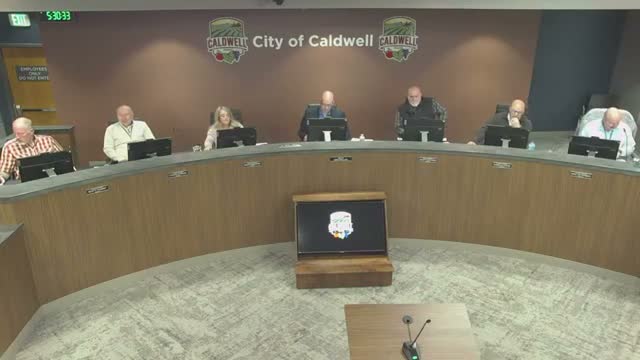
Summary
Consultants from Kittleson & Associates briefed the City Council on the Caldwell Area Transportation System master plan, how traffic impact studies (TIS) are conducted and when the city requires them, and how TISs feed the CIP and traffic impact fee program under Idaho law.
City councilors and staff heard a workshop presentation from Kittleson & Associates on how traffic planning tools and traffic impact studies shape Caldwell’s road investments and development review.
Mark Heisinger, who worked on the Caldwell Area Transportation System (CATS) plan, described the CATS plan adopted in 2023 as a long‑range (to 2050) master plan that inventories anticipated growth, identifies safety hot spots, and prioritizes more than 200 projects with cost estimates. He said the plan is intended to set high‑level performance measures — for example, where arterials should be widened and where signals or roundabouts are likely needed — and to feed the capital improvement plan (CIP).
Kittleson traffic engineer Lauren Nixel outlined how traffic impact studies (TIS) evaluate a development’s likely new trips and where they go, using ITE trip generation rates and regional travel models. Nixel explained that the city’s TIS policy generally requires a study for projects that generate more than 100 peak‑hour trips and that studies analyze existing, background (in‑process) and total future conditions and model operations for the worst 15‑minute period of the day.
The consultants stressed limits of a TIS: it identifies needed improvements, such as turn lanes or a roundabout, but does not design improvements, set funding responsibilities, change zoning or fix unrelated existing deficiencies. Heisinger noted the Idaho Development Impact Fee Act restricts how impact fees may be used — typically for system‑level, growth‑related projects within a 20‑year horizon — and that the city collects impact fees when building permits are pulled.
Councilors pressed consultants on timing and jurisdictional issues, including who schedules work on state roads such as Karcher Road (Idaho Transportation Department) and how counts and peak hours are chosen (strip counters, cameras, video review and standard AM/PM peak windows with adjustments for schools or commercial uses). Nixel said most TISs analyze the AM and PM peaks because collecting and analyzing every hour across a large system is time‑consuming.
The presentation closed with the consultants saying TISs inform conditions of approval, coordination among adjacent developments, and grant priorities; they also recommended the city consider adopting clearer TIS guidelines so studies are consistent and comparable.
The workshop concluded and the council proceeded to its regular meeting.