Rural Finance Authority seeks $50 million to keep low-cost loans flowing to farmers
Loading...
Summary
The governor's recommendation includes $50 million for the Rural Finance Authority to continue low‑interest loans for beginning farmers, disaster relief and farm improvements; RFA staff said loans must be secured by real estate and program demand exceeds remaining balances.
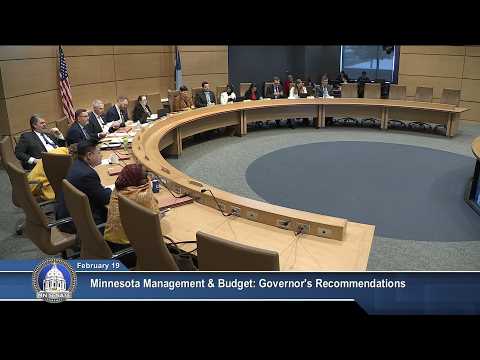
Tom Peterson, commissioner of the Minnesota Department of Agriculture, and Ryan Roles, senior loan officer for the Rural Finance Authority (RFA), asked the Capital Investment Committee to support a $50 million bonding authorization for the RFA.
Roles said the RFA uses bond proceeds to support several loan programs that help beginning farmers buy land, finance improvements and restructure debt. He told the committee the RFA participates with private lenders (retaining 55% while lenders retain 45%) and that loans are secured by real estate collateral. "These are not operating loans," Roles said; the program requires real-estate security and has historically included a 5-year prepayment penalty on loans sold to the RFA.
Roles reported the RFA has issued thousands of loans since 1986, with low charge-offs, and that prior appropriations (a $50 million 2023 authorization) have roughly $26 million remaining. Committee members asked whether proceeds could be used by farmers for operating expenses; Roles explained that while loans are secured by real estate, proceeds may free cash for operating needs because they can be used to purchase land or other collateralized assets.
Senator Rasmussen and others discussed whether the RFA is appropriately housed in the capital bill, since many capital investments fund physical infrastructure; Peterson and Roles pointed out RFA authorizations have frequently been enacted as stand-alone or early-session bonding bills in past years. Chair Pappas noted the RFA sometimes needs a deficiency appropriation if bonding does not occur early enough in session.
If enacted, the authorization would replenish the loan pool that supports beginning farmers and other ag-sector lending across Minnesota.