Get email alerts on the Internal Resolutions topic
No spam. Unsubscribe anytime.
Senate approves mileage and postage resolutions, introduces three bills for first reading
Summary
On Feb. 19 the Senate adopted a mileage resolution adding three new members and an annual postage resolution that sets each member’s postal budget at $1,170 (leaders receive an extra $450). The chamber also gave first reading to three Senate files and referred them to committees.
The Minnesota Senate adopted two routine internal resolutions on Feb. 19. Senate Resolution 58, introduced by Senators Murphy and Johnson, amends the mileage resolution to include the chamber’s three newest members and was adopted following a roll call/voice vote.
Senate Resolution 59, the annual postage resolution, was described by Senator Murphy as identical to last year’s and sets a postal budget of $1,170 per member for the calendar year; the majority and minority leaders each receive an additional $450. The resolution was adopted by the Senate.
Separately, the chair read the introduction calendar for first readings. Senate File 3658 was referred to the Committee on Health and Human Services; SF 3665 was referred to the Committee on Judiciary and Public Safety; and SF 3687 was referred to the Committee on Agriculture, Veterans, Broadband, and Rural Development.
These items are procedural; the postage and mileage resolutions determine internal budgets and allowances for members, and the introduced bills proceed to committee consideration as typical first-reading actions.
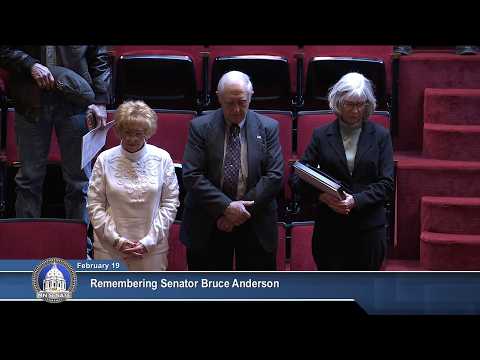
The Senate recessed later in the day for memorial tributes and adjourned until Feb. 23.
AI generated
The text on this page is AI generated. Summaries, highlights, analysis, and video transcripts are all produced from the original source material.
AI can make mistakes, so if you spot one, and we will fix it for everyone.
Note: the source content is unaltered by us. Any content source we link to, be it a video, an audio recording, or a document, is presented exactly as its publisher released it. That publisher is usually a government body, sometimes an individual official or another organisation.