Lifetime Citizen Portal Access — AI Briefings, Alerts & Unlimited Follows
Bossier City Council declines to override MPC on "Bloom House" family-visitation center
Loading...
Summary
The council upheld the Metropolitan Planning Commission's unfavorable recommendation on a conditional-use request for Bloom House at 2519 Waverly Drive after neighbors raised parking, safety and address-confusion concerns; the motion to override failed on a 1–6 roll call.
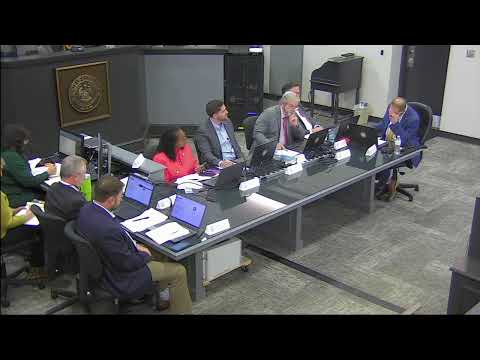
On Feb. 17 the Bossier City Council declined to override a Metropolitan Planning Commission recommendation and therefore did not approve a conditional-use permit for Bloom House, a proposed supervised family visitation center at 2519 Waverly Drive.
Applicant Adam Lytle told the council the center would be appointment-based, daytime-only and would not include overnight stays: "No one is going to live at this property. There will be no overnight stays. There will be no unsupervised visits." He and supporters said Bloom House would provide a home-like, neutral setting for supervised reunification visits and address a gap in local services.
Supporters included foster parents, volunteer organizers and former Louisiana child-welfare officials who said supervised, structured visits can help families prepare for reunification. David Matlock, who identified himself as a former juvenile judge and a former secretary of the Louisiana Department of Children and Family Services, described similar programs as feasible and said the model is not inherently dangerous.
Neighbors and other opponents urged the council to deny the use in a residential neighborhood. Opponents cited constrained on-street parking, narrow streets used by schoolchildren who walk to school, and an incident they said occurred Feb. 6 in which a person seeking the proposed site mistakenly attempted to enter a neighboring home. Leanne Boudreaux, a nearby resident, described that incident and said it showed address confusion was already a risk. Ruth Pope Johnston, a retired social worker, told the council that the proposed program in a residential setting is an "off-model" option and argued that commercially zoned areas would provide safer access and better emergency response and parking.
Council discussion acknowledged the program's mission and the public interest in supporting reunification, but several council members said site location in a tight residential parcel raised too many practical and safety concerns. Councilman Brian Hammonds and others said they supported the concept but not in that neighborhood.
A motion to consider and thereby potentially override the MPC's unfavorable recommendation was put to a roll-call vote; the result was one yes (Councilman Chris Smith) and six no votes (Councilmen Cochran, Hammonds, Cliff Smith, Gerard, Maggio; Councilwoman Ross), so the motion failed and the MPC's unfavorable status remains in effect. The council did not approve the conditional use at the Feb. 17 meeting.
Clarifying details: the MPC had considered the application and issued an unfavorable recommendation; the Bloom House proponents said the property would operate with appointment-only scheduling, no signage and no commercial public access. Neighbors documented concerns about on-street parking capacity on North Waverly and cited the neighborhood's mandate that many children walk to school, raising a safety concern for increased traffic in the interior of the subdivision.
Next steps: With the council upholding the MPC recommendation, the applicant may revise the request or pursue a different site; the transcript records no final vote on remand or further action at this meeting.