
House Elections Committee hears competing proposals to alter Missouri term limits and leadership tenure
Get AI-powered insights, summaries, and transcripts
Subscribe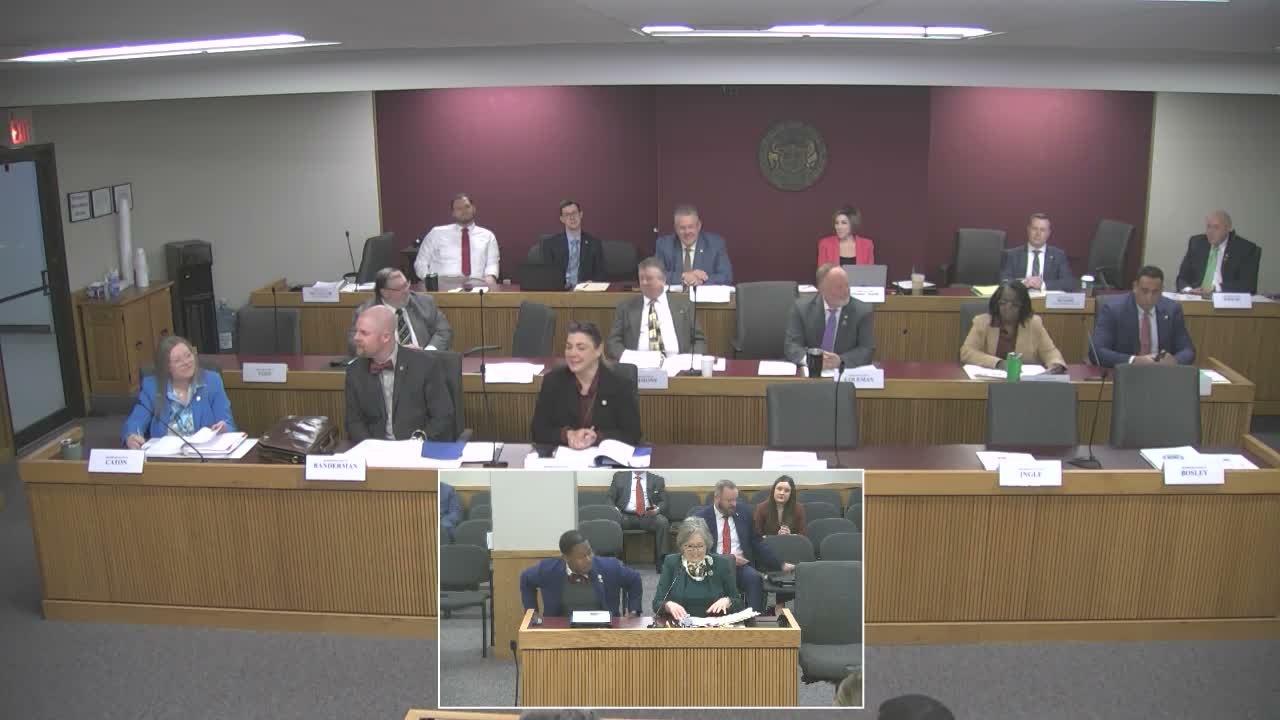
Summary
The House Elections Committee heard testimony on four similar proposed constitutional amendments that would let legislators serve 16 years in either chamber and add limits on leadership tenures; sponsors argued it preserves institutional knowledge while opponents warned of voter backlash and election costs.
The House Elections Committee on an unspecified date heard presentations and public testimony on multiple House Joint Resolutions that would change how Missouri counts legislative service and limit leadership tenure.
Sponsors told the committee the measures would remove the current single-chamber restriction and allow a lawmaker to serve up to 16 years total in either the House or the Senate, while adding caps on leadership terms. Representative Peggy Grama, who identified herself to the committee as representing the 7th District, said the change "would simply remove the single chamber prohibition allowing General Assembly members to serve no more than 16 years total in either chamber of the legislative bodies." She also said the proposal would limit any person to three terms as Speaker of the House and two terms as President Pro Tem of the Senate.
Representative Marty Joe Murray, who presented a companion resolution, framed the proposals as an effort to "bring the power back to the people," saying the current structure has shifted institutional influence toward long‑tenured lobbyists and staff. He urged the committee to consider how the measures might strengthen bipartisan collaboration and preserve institutional memory.
Representative Geoff Myers, presenting HJR 121, added a separate structural proposal to reduce the size of the House to 103 members. Myers said shrinking membership would raise district population targets (roughly to the high 50,000s), lower aggregate administrative costs and help build coalitions more efficiently. "Nobody should be making a decision on their own seat," Myers said, urging safeguards to avoid the appearance of impropriety if the change were implemented.
Committee members asked detailed questions about timing, optics and unintended consequences. Several lawmakers pressed sponsors on why the measures would take effect in 2030 rather than immediately; sponsors said the later effective date was intended to avoid creating a perception that supporters were seeking personal advantage. Members also discussed how the proposals would handle partial terms and special elections, whether leadership limits should be consecutive or lifetime, and whether reducing the House size would dilute representation in rural areas.
A witness testifying in opposition, Arnie C. Acdinoff, identifying himself as a state public advocate, urged rejection of the constitutional amendments and defended the 1992 limits approved by voters. He raised fiscal concerns about putting constitutional amendments on the ballot, estimating the cost at roughly $9–10 million, and warned the public would view repeated attempts to alter a prior ballot decision skeptically.
The committee did not take final action on the joint resolutions during the public hearing portion; sponsors signaled they would accept amendments to clarify edge cases such as partial terms and special‑election procedures. The hearing record closes with the committee moving into executive session on other business.