
Bankers urge guardrails as House panel weighs bill on coerced debt
Get AI-powered insights, summaries, and transcripts
Sign Up Free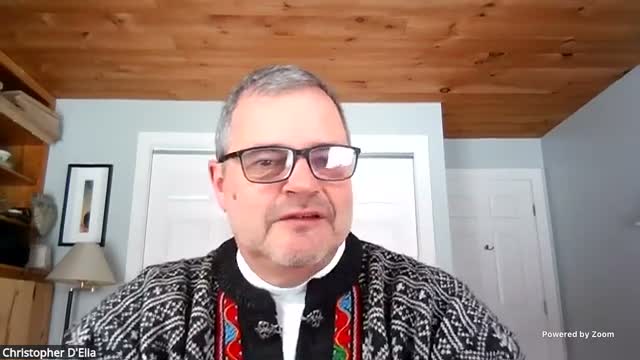
Summary
Testifying on H.385, Chris Delia of the bankers association told the House Judiciary Committee he supports relief for victims of coerced debt but warned that weak procedures could invite fraud and that creditors need a clear path to recover losses and, in some cases, pursue third-party perpetrators.
Chris Delia, who identified himself as president for Mount Bankers Association, told the House Judiciary Committee on Friday that his organization supports finding a remedy for victims of coerced debt but urged lawmakers to add safeguards to prevent fraud.
"We absolutely wanna find a solution to the victims of coerced debt, especially when they're in situations where there is the threat or actual violence," Delia said in opening testimony, adding that banks want to avoid opening a process that could be exploited by bad actors. He said the association’s responses to the commerce committee were designed to "put additional guardrails around a very new program" and that those guardrails would not prevent a debtor from pursuing a court claim.
The committee pressed Delia on who should bear the burden of proof if a debtor claims debt was coerced. Delia said several other states place the burden on the debtor to prove coercion; he also described state law options that require a court order before creditors act, which the association declined to press for in Vermont because of the difficulty some victims would have obtaining immediate court relief.
Members considered whether a prior judicial adjudication should bar a later claim under the bill. Delia said that if a court has already reviewed the issue and issued remedies, that outcome should resolve the question for creditors and that the bill should align with existing court processes where appropriate.
The panel spent substantial time discussing the tension between protecting victims’ safety and giving creditors a path to recover losses. Delia argued creditors should retain the ability to pursue a third-party perpetrator — including where the perpetrator does not appear on loan paperwork — to recover assets such as vehicles or repossess collateral. "We would want the ability to be able to go after that individual. They're the ones that created the fraud," he said.
Several members suggested procedural options to balance competing interests. Representative 5 proposed a model where a court first determines whether debt was coerced, then the default is that perpetrator identity is disclosable to creditors unless the debtor obtains a court order to keep it confidential; that approach would give both sides an opportunity to make their case in court.
Committee members and witnesses also debated what qualifies as "adequate documentation" and whether a qualified third party supporting a victim’s claim should be independent. Delia urged that any third-party attestation be free from conflicts, and legislative counsel said it would work on clearer statutory language.
The committee did not take formal action on H.385 during this session. Members directed staff and witnesses to continue refining language, including standards for documentation, the burden of proof, and the circumstances under which a perpetrator’s identity must be disclosed.