Get Full Government Meeting Transcripts, Videos, & Alerts Forever!
Get email alerts on the Immigration And Public Safety topic
No spam. Unsubscribe anytime.
Republican leaders urge restraint on national policing rhetoric, question mask bill and state limits on federal regulation
Summary
During a press availability, Republican leaders said state lawmakers should avoid escalating rhetoric about national policing incidents, questioned the efficacy and enforceability of a face-covering bill cited by reporters, and warned against state attempts to regulate federal detention facilities.
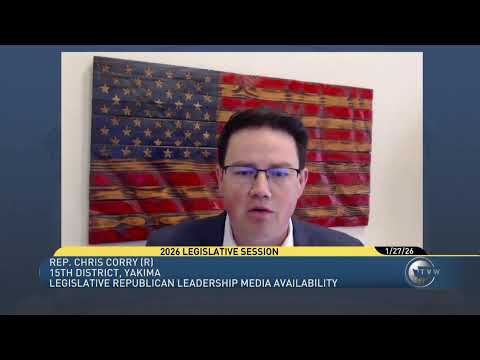
Republican leaders at a media availability in Olympia told reporters they want an impartial investigation into a high-profile policing incident reported elsewhere and urged political leaders not to "up the rhetoric." Deputy Republican Leader Chris Corey said the caucus has not adopted a formal position but emphasized that "we need transparency" and a careful investigation.
Senate Republican Leader John Braun criticized what he called “incendiary” remarks by the governor and said those statements risk diverting attention from state issues. "They deserve a full, impartial, and careful investigation," Braun said of the national incidents, and added that any wrongdoing should be addressed through due process.
Reporters raised a separate but related question about a bill that would restrict face coverings by federal law enforcement operating in the state (cited in the availability). Speakers said the bill is legally and practically complicated, that state law has limits when addressing federal actors, and that some federal agents — specifically ICE — have reported doxxing and harassment that prompted calls for additional protective measures.
When asked about a Senate measure (cited at the event) that would expand the state health department's authority to inspect the Northwest Detention Center in Tacoma if the department were denied access, Republican respondents said state law cannot unilaterally override federal facilities and characterized some majority tactics as political pressure rather than workable policy.
Leaders repeatedly framed these issues as complex questions of legal authority, officer safety and state-federal boundaries rather than simple political wins. They urged careful consideration and cooperation where feasible, while criticizing what they described as symbolic measures that would be difficult to enforce.