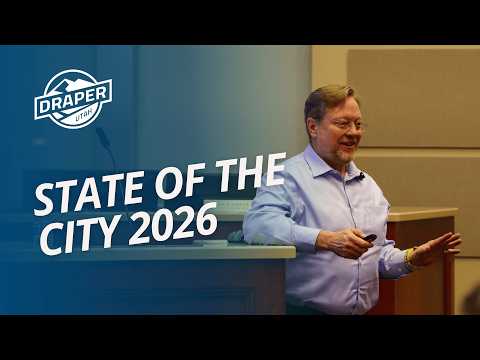
Mayor outlines ‘The Point’ as 630-acre mixed-use center with 5,000-seat venue and transit connections
Loading...
Summary
In a public address, the mayor said backbone infrastructure for The Point is installed and a phase‑1 developer will start buildings this year; he described a 5,000‑seat event center, 350 multifamily units, retail space and planned FrontRunner transit access.
The mayor told residents that work on The Point — a large mixed‑use project on roughly 630 acres — is moving from infrastructure into construction. "This is what happened this year at The Point ... we're putting in the backbone infrastructure so that the first buildings can come out of the ground," he said, describing sewer, storm drain and major utility work already completed.
The mayor said the site's first phase includes a 5,000‑seat event center "designed for concert type venue," about 350 multifamily units and roughly 45,000 square feet of retail space. He said a phase‑1 developer would begin building this year and that the master plan includes a new FrontRunner stop and eventual light rail service to make the area transit‑oriented.
He also emphasized a River‑to‑Range trail through the site to link the Jordan River Trail with Porter Rockwell Trail and help residents bike or walk to nearby recreation and workplaces. The mayor said planners expect the event center to be programmed heavily: "They tell us they'll have it programmed over 200 nights a year."
During a resident Q&A, the mayor acknowledged traffic concerns and said The Point's internal road network is being designed "to handle the inflow and the outflow to the site," while also stressing that planners are seeking transit options to reduce auto trips. He described the initial infrastructure as necessary to allow buildings to be delivered in 2026–2027.
The mayor credited staff and a listed project director, Mike Ambrey, with directing site construction and said the city is coordinating funding mixes (general fund, local matches and federal grants) where appropriate. He cautioned that accepting federal funds can add cost and compliance burdens and that the city prefers local funding where feasible.
Next steps he listed included completion of the backbone infrastructure, permitting for phase‑1 buildings and continuing coordination on transit and road improvements tied to the development.