
Lenoir residents and service providers defend emergency use of sleeping pods; council cites zoning and safety rules
Get AI-powered insights, summaries, and transcripts
Subscribe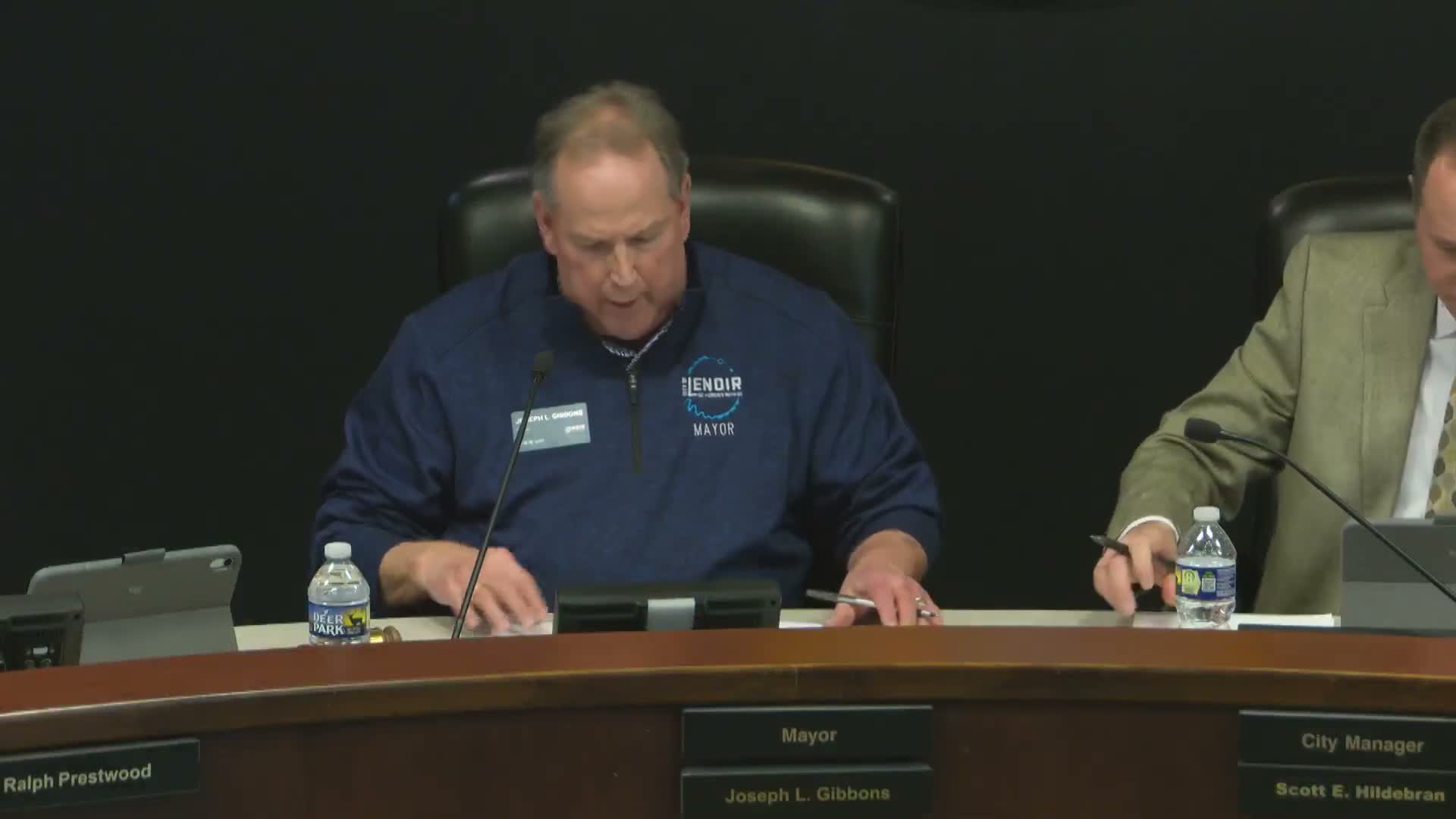
Summary
At a crowded Feb. 17 public comment period, users and volunteers of nonprofit His Humble Hands described the pods placed at 532 Harper Ave as life‑saving during a recent ice storm while the city reiterated zoning and fire‑safety requirements; no formal action to permit the pods was taken.
The City of Lenoir heard more than a dozen public commenters on Feb. 17 about sleeping pods placed by the nonprofit His Humble Hands at 532 Harper Avenue, a use the city says was not permitted. The council read a statement saying staff allowed temporary use during an ice storm for safety but would enforce zoning and state law going forward.
Supporters and clients of the organization told the council the pods and the organization’s broader services had been lifesaving. “If it wasn't for them, I'd be dead,” said Joseph Twist, who credited the group with four years of sobriety and housing. Denise Aristia, identified in the meeting as the CEO of His Humble Hands, apologized for mistakes in how the pods were used, said the pods were intended for a transitional housing project and that two tow companies were removing units, and estimated the group had assisted about 120 people in roughly three-and-a-half weeks: “There's no doubt in our minds we saved somebody's life that night, especially the night when it was 8 degrees.”
Amber Bradford, homeless response manager with the Western Piedmont Council of Governments and the unsheltered access coordinator for the North Carolina Balance of State, framed the issue as one of systems and capacity. She told the council that homelessness is complex and regional, described a need for coordinated, sustainable shelter and transitional housing, and urged connecting volunteer efforts to resources and regulatory requirements. Bradford also cited higher-level data, saying more than 11,000 people experience homelessness nightly in North Carolina and that nearly 40% are living outside.
City officials emphasized safety and legal constraints. Fire Marshal Chris Jacobs told the council that what constitutes a long‑term shelter carries fire‑safety requirements — “a shelter is gonna require a sprinkler system. It's gonna require a fire alarm system” — and said County Emergency Management is the responsible partner for organizing official shelters in large incidents. The council’s prepared statement said city staff had delayed enforcement during the storm to prioritize life safety but that zoning limits at 532 Harper Avenue mean pods were not a permitted use there.
Several people who had stayed or volunteered at the site described immediate benefits: Mark Allen said staff fed and housed him and helped him find work within days; Susanna Miller said a last‑minute referral to His Humble Hands saved her and her children; Tabitha Barrier said the warming shelter prevented potential death during the storm. At the same time, council members and staff noted there are existing shelter beds and programs in the county but acknowledged capacity and access limitations.
The council did not vote to change zoning or to authorize permanent use of pods at the meeting. The mayor’s statement said community groups and faith partners are meeting to pursue next steps and staff will follow normal processes for permitting and enforcement. The discussion closed after public comment and the council moved on to other agenda items.