
Committee debates gift-ban carveout for nonprofit mental-health supports for first responders; author accepts definition change and agrees to lay bill over
Get AI-powered insights, summaries, and transcripts
Subscribe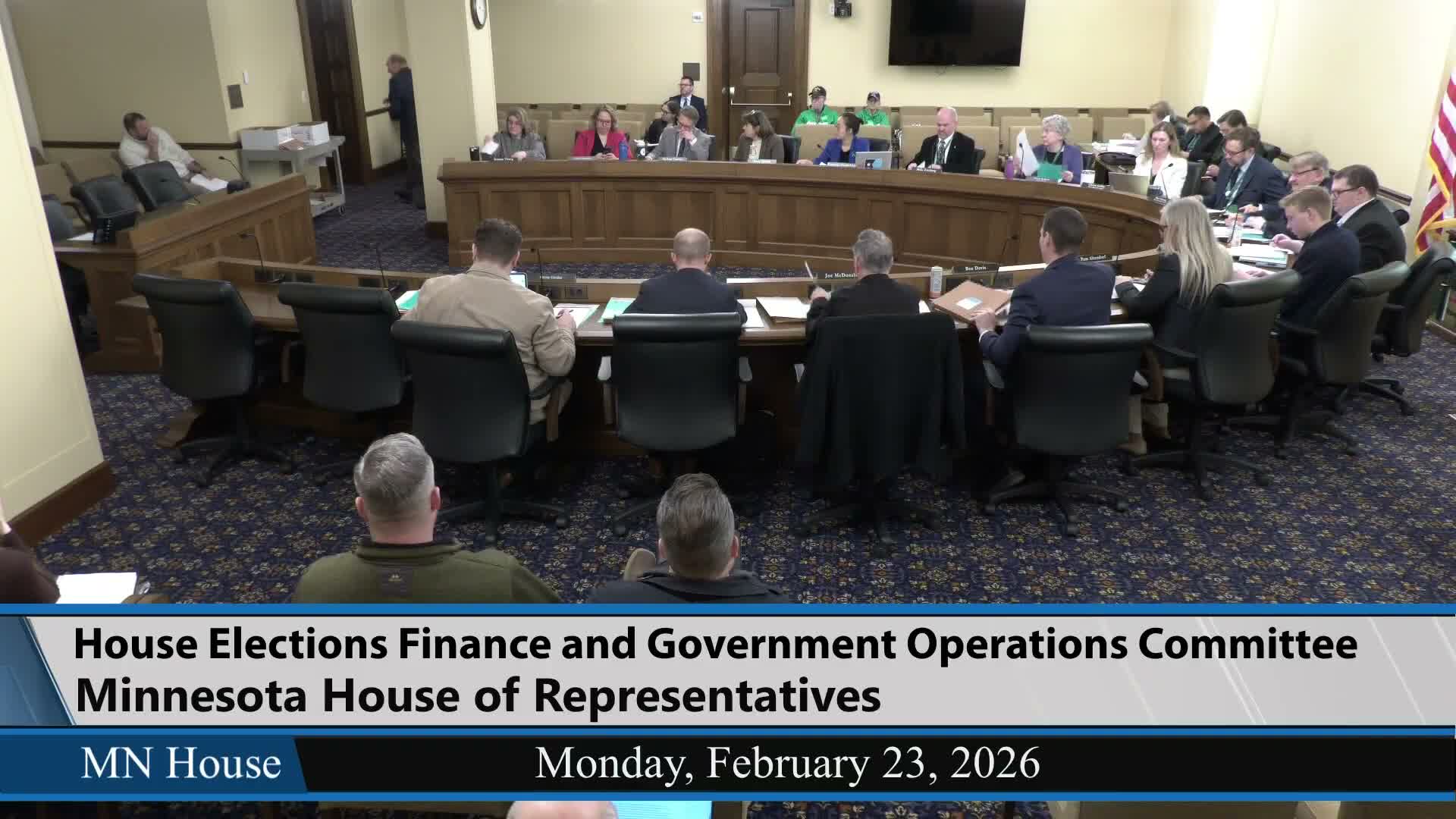
Summary
HF2526, intended to clarify that voluntary nonprofit mental-health and wellness programs for first responders are not prohibited gifts, drew testimony from first-responder advocates and law-enforcement groups; members pressed for clear definitions and limits, the author accepted an amendment tying the bill to the statutory 'public safety officer' definition and agreed to lay the bill over for further drafting.
Members of the House Elections Finance and Government Operations Committee heard emotional testimony and detailed policy discussion on House File 2526, a bill the author said would remove legal uncertainty that keeps first responders from accessing voluntary nonprofit mental-health supports.
Representative Duran introduced the bill, saying it fills "a gap of helping out our first responders" by allowing them "alternate ways to seek help" that current interpretations of the local gift-ban may unintentionally block. "This bill is not about gifts. It's not about perks, and it's definitely not about favors. It's about the mental health access and statutory clarity," said Chris Tetro, president of Hometown Hero Outdoors and a retired medical law-enforcement officer who testified about PTSD and barriers to participation.
David Titus, executive director of the Minnesota Police and Peace Officers Association, told the committee "Clear statutory language protects agencies, officers, and municipalities from unintended violations and consequences," and argued that removing ambiguity could improve recruitment and retention.
Committee members pressed on definitional scope: several argued the undefined phrase "first responders" should be replaced with the statutory term "public safety officer" used in last year's legislation to avoid uneven local interpretations. Nonpartisan staff explained the A1 amendment would add that definition and link to the prior statute. Representative Duran ultimately said he would accept the A1 amendment but many members remained concerned about open questions such as who exactly would be covered (paid staff, volunteers, dispatchers) and whether a value cap should limit what activities qualify.
Because HF2526 goes to the general register and would not see another committee stop, members and staff recommended more stakeholder work. Representative Greenman and others asked the author to work with cities, counties, and state agencies; the author agreed and the committee laid the bill over for further drafting and return at a later date.
The committee record shows broad support for the bill's aim — increasing access to voluntary supports — but also an appetite for precise statutory language to avoid creating new ambiguities that might discourage assistance rather than enable it.