Beaufort County adopts Mideast Regional Digital Inclusion Plan, encourages grant pursuit
Loading...
Summary
The board voted to adopt a regional digital‑inclusion plan produced by the Mideast Commission; the plan (389 survey responses) sets targets such as 200/20 Mbps minimum service and identifies grant‑ready projects; adoption does not obligate county funds but enables grant applications and letters of support.
The Beaufort County Board of Commissioners voted to adopt the Mideast Regional Digital Inclusion Plan, a cooperative strategy developed by the Mideast Commission with technical assistance from Band NC (Building a New Digital Economy, NC State University) and the North Carolina Department of Information Technology survey tools.
Presenter Jamie summarized the planning process: a seven‑meeting steering committee from August 2024 to May 2025, 99 committee members across the region, three open houses, two focus groups and 389 resident survey responses collected via the state Digital Equity Survey. The plan sets goals in four principal areas: device access, affordability/subsidy programs, broadband availability and resiliency, and digital skills training.
The plan calls for all households and businesses to have reliable Internet capable of at least 200 Mbps download and 20 Mbps upload and recommends that once an address is served by cable it be upgraded to fiber. Priority projects in the plan were packaged as "grant‑ready" proposals, including a device access program, Internet subsidy program, cell‑tower expansion, resilience and backup networks, public access locations and workforce/digital‑skills training.
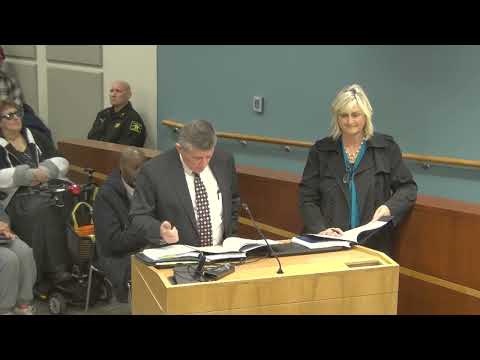
Jamie told the board adoption would not commit county funds: "We are asking the board to consider adopting the plan; it doesn't commit you towards any money or anything like that," she said. Adoption provides a locally vetted plan that municipalities, nonprofits and the community college can use to strengthen grant applications.
County staff and commissioners discussed roles for applying and administering grants. County Manager Brian Bridal and others noted some grant programs allow councils of governments or commissions to be the applicant; staff said they would research whether the Mideast Commission or the county should be the primary applicant and would return with a recommendation.
Next steps: the board adopted the plan by motion and requested staff return with options for grant‑application roles, potential county involvement in applications, and possible letters of support.