Get Full Government Meeting Transcripts, Videos, & Alerts Forever!
Get email alerts on the Community Survey topic
No spam. Unsubscribe anytime.
Pitkin County adopts National Community Survey platform, plans mailed invitation to ~4,000 households
Summary
County staff will run the biennial community survey on the National Community Survey/Polco platform with an interactive dashboard, sub‑area mapping and a six‑week field period; planned oversample of rural commissioner districts aims for 500–700 responses and a margin of error below 5%.
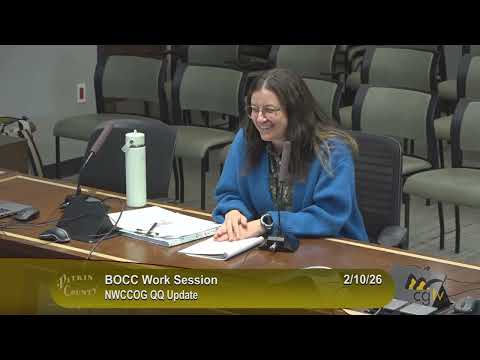
Pitkin County staff told commissioners on Feb. 10 that the county’s biennial resident survey will use the National Community Survey (NCS) platform through consultant Polco and will emphasize shorter, longitudinal questions, interactive reporting, and sub‑area analysis by commissioner district and urban/rural status.
Allison Bechtash, the county’s strategic communications manager, and Jason Neumeier of Polco described the advantages of NCS: a 30–40‑page static PDF packet plus an interactive online dashboard that allows policymakers to drill down by geography and demographic groups. The county will carry forward roughly 30 longitudinal questions so results can be compared to prior surveys.
Sampling and timeline: staff proposed mailing invitations to about 4,000 households in a community of roughly 17,000 people with a six‑week open period (four weeks invitation-only, two weeks open link). Polco estimated typical Colorado communities receive a 12–15% response rate and projected 500–700 responses for Pitkin County, yielding a margin of error below 5% (roughly 3.25% in Polco’s projection). The county also plans to include English and Spanish paper options and outreach to second‑home and workforce populations through open links.
Question wording and response options: commissioners debated whether to separate 'don't know' and 'not applicable' as distinct responses. Polco noted adding a fifth option would slightly alter the instrument but that combining 'don't know' and 'not applicable' in one column was acceptable if the board preferred it.
Next steps: staff will finalize the invitation letter (typically addressed from the board chair), work on a benchmark community list for comparisons, and proceed with address lists and packet preparation. Results will be available in an interactive dashboard and shared with commissioners for follow-up and departmental analysis.