Get Full Government Meeting Transcripts, Videos, & Alerts Forever!
Get email alerts on the State Legislation topic
No spam. Unsubscribe anytime.
Northwest Colorado COG urges vigilance on data-center bills, stresses local water authority
Summary
Kristen Green of Northwest Colorado Council of Governments briefed the Pitkin County commissioners on QQ’s work and urged vigilance at the state level, warning draft data-center incentives could undercut local 10-41 authority and fail to ensure independent water‑supply reviews.
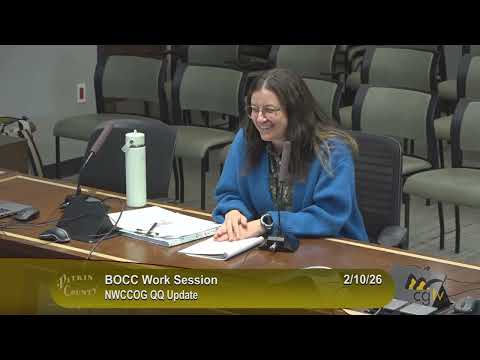
Kristen Green, policy advisor and member services manager for the Northwest Colorado Council of Governments (NWCCOG or QQ), told the Pitkin County Board of County Commissioners on Feb. 10 that QQ is closely tracking several state bills that could affect how renewable-energy projects and data centers are sited and permitted.
QQ’s work, Green said, includes legislative monitoring, administrative rulemaking and litigation support for member governments. She singled out a draft data‑center incentivization bill (cited in QQ materials as House Bill 1030) that would create a state commission to offer incentives such as tax breaks to data‑center developers. Green said QQ circulated a recommended position opposing the bill because it would allow developers’ or providers’ assessments of water supply to substitute for independent review and, in some cases, permit action without a provider’s assessment.
“It felt very premature to be offering incentives for something that not all local governments have had a chance to think through,” Green said while describing QQ’s concerns about transparency and the potential for increased water demand or future trans‑mountain diversions.
Why it matters: Green emphasized that many local governments already exercise authority under the 10‑41 framework to regulate large infrastructure and water projects. QQ’s stated policy is to protect that local authority and to ensure state-level proposals do not have language that would effectively preempt local permitting decisions. The presentation also signaled QQ is watching other renewable-energy and siting bills and drafting positions as the legislative session progresses.
Supporting detail: Green reviewed QQ’s five core program areas — Colorado legislature engagement, state and federal rulemaking (including the dredge‑and‑fill rulemaking before the Water Quality Control Commission, Reg 87), litigation and counsel support, policy making coordination (e.g., the DOLA-led strategic growth report), and technical/legal support such as the 208 regional water‑quality planning role.
Commissioner discussion and next steps: Commissioners raised related local concerns — including microgrids, solar siting, and how incentives for large data consumers compare with incentives for community-scale microgrids. Green said QQ could coordinate more directly with county legislative staff and that QQ maintains filtered legislative mailing lists for staff and local lobbyists. She also noted a one-time Northwest COG contribution to a QQ legal defense fund to bolster litigation capacity.
The county’s oversight: Green and commissioners agreed that any state policy must be checked against existing county authority on water and development. QQ’s position papers and notices were offered as a resource for county staff and elected officials tracking the bills. The commissioners did not vote on a formal action at the meeting; staff were asked to continue monitoring draft legislation and report back on specific bills as they are introduced.