Get Full Government Meeting Transcripts, Videos, & Alerts Forever!
Get email alerts on the Liheap Working Group topic
No spam. Unsubscribe anytime.
DSS convenes LIHEAP working group to study vendor pay and bulk purchasing
Summary
The Department of Social Services convened a working group to evaluate how to compensate deliverable fuel vendors, analyze effects on LIHEAP client benefits, and study bulk‑purchasing options required by recent legislation; stakeholders including vendor associations, community action agencies and legislators joined the kickoff meeting.
Peter Hadler, deputy commissioner at the Department of Social Services, opened the first meeting of a newly formed LIHEAP working group and framed the group's charge as studying vendor compensation, bulk purchasing and potential impacts on client benefits tied to recent state legislation.
"My name is Peter Hadler. I'm a deputy commissioner here at the Department of Social Services," Hadler said as he introduced the group's purpose and DSS staff who will lead the effort. He said Cassandra Norfleet Johnson and Lynette Pisani will lead future meetings for DSS.
Cassandra Langford Johnson, a program manager at DSS who oversees the LIHEAP program and related block grants, told the group the presentation would first review statutory requirements and focus on three tasks the statute requires the group to study. "The first part of this presentation is really around looking at the purpose of what this work group is really about and our statutory requirements," she said.
Stakeholders and agency partners attending the kickoff included deliverable‑fuel vendor representatives, community action agencies, the Department of Administrative Services, Connecticut Legal Services, the Office of Consumer Council, the Office of Policy and Management, and legislative members.
Chris Herb, representing deliverable fuel vendors, said his association has worked with DSS for roughly 25 years and expects the group to produce actionable recommendations to serve eligible consumers. "We represent deliverable fuel vendors in Connecticut, and we've been in deep conversation with DSS for nearly the 25 years that I've been working for the association," Herb said.
Michelle James, executive director of the Community Action Agency of Western Connecticut, described the agency's service area and underscored the need for timely assistance to households that rely on deliverable fuels. She said the agency serves "the 25 towns along the New York, Connecticut border" in the region she represents.
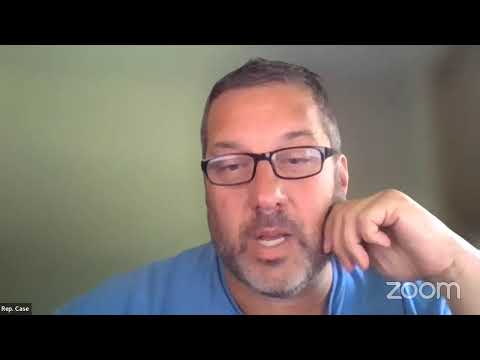
Representative Rob Case, who disclosed he works in the energy industry on the propane side and covers multiple states, said he could participate as an expert if needed and later urged consideration of current market conditions: "The market's dropping big time, so let's buy now." He said he covers 28 states in the propane business.
Danielle Paladino of the Office of Policy and Management said OPM will assist with transmitting the LIHEAP plan through the state's review and approval process and is participating as part of a listening tour. Dan Giacome, director of program oversight and grant administration at DSS, introduced his oversight role, which includes OCS, SNAP, Medicaid eligibility and cash eligibility programs.
Hadler said DSS staff (including presentation support from Matt Festa, legislative coordination from Dave Bridal and minute‑taking by Kelly Bartimioli) will continue to convene the group and solicit expertise from members. Cassandra closed the portion of introductions by outlining the group's immediate tasks and statutory framework and invited stakeholder feedback on items for upcoming meetings.
Next steps: DSS will follow up with a proposed agenda for the subsequent meeting and seek the group's input on additional items to study, notably vendor compensation approaches and bulk‑purchase models. The presentation of statutory provisions and the three core study areas was the meeting's substantive outcome; there were no formal motions or votes reported during the kickoff.