Get Full Government Meeting Transcripts, Videos, & Alerts Forever!
Get email alerts on the Quality Reports topic
No spam. Unsubscribe anytime.
DSS and Mercer caution providers that early quarterly quality reports reflect limited claims data
Summary
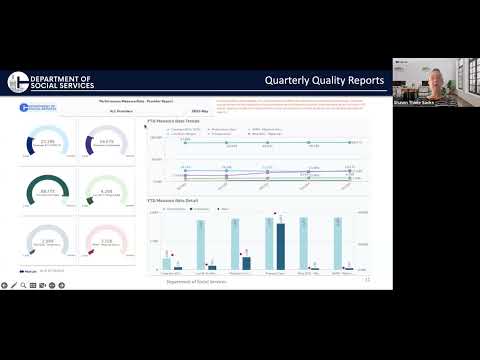
Mercer and DSS told providers the July quarterly reports use rolling, limited claims and encounter data (one‑month claim lag, one‑month processing lag) and warned that measure denominators and small sample sizes may produce misleading early results; DSS and Mercer agreed to recheck measure specifications when questions arose.
At a DSS provider forum, Mercer and DSS staff walked providers through the maternity bundle’s quarterly quality reports and repeatedly cautioned that the reports reflect limited early data and a rolling year‑to‑date approach.
"We would caution you to use this data as it exists to determine potential impact…because it is so limited and run out," said a Mercer presenter, noting that claims and encounter lags mean a fuller picture of trends likely will not be possible until 2026.
Providers pressed the team about specific denominators: one participant pointed out the low‑birth‑weight denominator appeared as 4,331 in the report and asked whether that count was accurate given program timing and expected attribution. Mercer and DSS responded that the metrics come from claims and encounter sources and that they would re‑examine the numerator/denominator definitions and the measure specifications.
Mercer said upcoming reports (the next is scheduled for Oct. 31) will add encounter‑form measures — doula encounters for opted‑in practices, a behavioral‑health risk assessment measure, and a breastfeeding measure — but reiterated that early encounter data are smaller and should be interpreted cautiously.
DSS and Mercer committed to providing measure specifications with future dashboards and to follow up with practices and CHN to resolve any apparent denominator anomalies.