
Panel raises concept allowing affordable housing on religious properties; legal questions flagged for hearing
Get AI-powered insights, summaries, and transcripts
Subscribe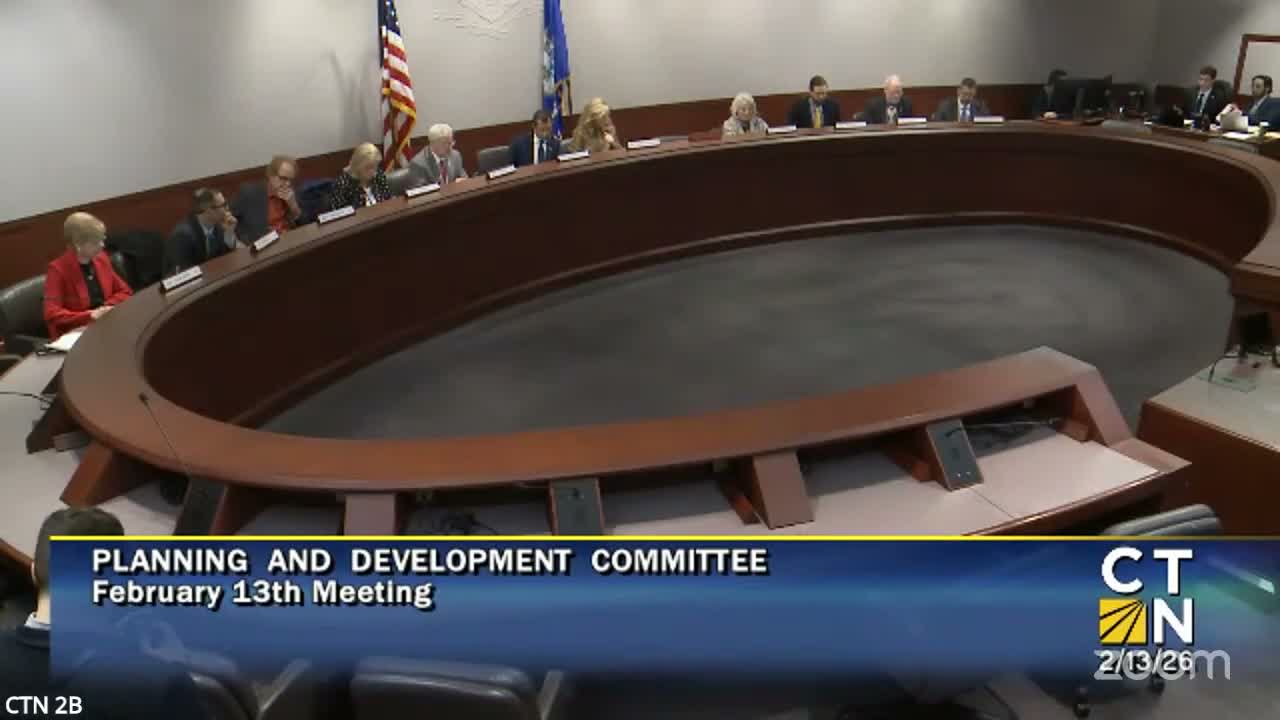
Summary
The committee advanced a concept Feb. 13 to allow affordable housing development on certain land owned by religious organizations. Leaders said developments would not be tax-exempt and that constitutional and zoning questions will be resolved at public hearing.
The Planning and Development committee voted Feb. 13 to raise for public hearing a concept that would allow affordable housing development on certain land owned by religious organizations, advancing the idea for public review despite questions about constitutional and municipal impacts.
Co-chair (Speaker 3) said religious organizations have approached the committee seeking permission to convert underused properties—such as rectories, convents or large parking areas—into affordable housing. "It would not be tax exempt," she said when asked about property-tax status, adding that the committee raised the concept to better understand the legal and policy implications.
Committee member (Speaker 5) questioned whether granting special permissions to religious organizations would pass constitutional muster and warned that coupled changes in other housing bills could alter the character of suburban and rural towns. He urged careful scrutiny at a public hearing.
Clerk/Staff (Speaker 8) called a roll and recorded a mix of 'yes' and 'no' responses; the motion to raise the concept for public hearing carried. Committee members said detailed language has not yet been drafted and that legal counsel, stakeholders and public testimony will help shape any bill.
The committee scheduled follow-up activity and said questions about tax treatment, setbacks, infrastructure capacity and municipal approvals will be addressed at a public hearing before any formal proposal is advanced to a committee vote.