Advocates urge Connecticut to raise Husky C asset limit, simplify MedConnect access and clarify ABLE rules
Loading...
Summary
Council on Developmental Services members told the Human Services Committee that Connecticut’s Husky C Medicaid asset limit ($1,600 individual, $2,400 couple as stated in testimony) is the lowest in the nation and urged tying it to the federal SSI level, improving MedConnect enrollment (add a line to the WE‑1 form) and clarifying ABLE-account successor and estate rules enacted under Public Act 23‑137.
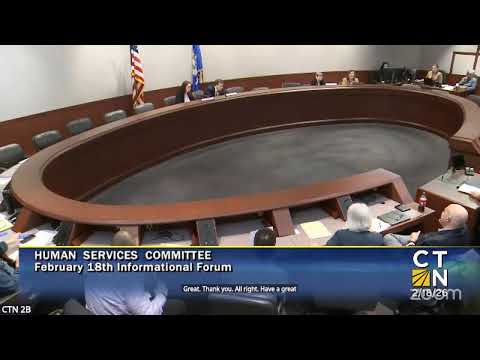
Christine Haynsworth Strauss, chair of the State Council on Developmental Services, told the Human Services Committee that the council seeks small, low-cost changes to reduce paperwork and help adults with intellectual and developmental disabilities work without losing supports.
"In consultation with the commissioner of developmental services, the council recommends legislation that would enhance and improve the quality of the programs and services provided by the department," Strauss said in opening testimony.
The most immediate policy change urged by witnesses was raising Connecticut’s Husky C Medicaid asset limit. Michael Beloff, a certified financial planner and chartered special needs consultant, said Connecticut’s Husky C is set at $1,600 for individuals and $2,400 for couples and that the state is now the only one in the country with an asset limit below $2,000 as presented in testimony.
"Tying the Husky C asset limit to the federal SSI limit will make paperwork and record-keeping infinitely easier," Beloff said, arguing that a modest increase would not dramatically increase roll costs while easing confusion for families.
Beloff also recommended procedural fixes to make work-payments easier to manage. He told lawmakers that MedConnect — Connecticut’s Medicaid program for employees with disabilities — allows participants to earn higher wages and preserves access to waiver services, but that the paper intake form (the WE‑1) has no explicit checkbox or line to apply for MedConnect. "Generally, it would just mean adding a line to the WE‑1 form," he said.
Witnesses also described post‑2023 complications around ABLE accounts. Testimony noted that Public Act 23‑137 (section 59, enacted in 2023) eliminated the Medicaid clawback provision for ABLE accounts, but that implementation questions remain, including whether the exemption applies only to Connecticut’s ABLE account and the restriction that only a sibling with a disability may be a successor owner under current practices. As presented, advocates asked the legislature to allow contingent successor owners or to add a transfer-on-death designation to avoid subjecting ABLE proceeds to estate Medicaid liens.
Committee members pressed for comparators. Beloff cited several state examples as testimony: North Dakota ($3,000), New Hampshire ($2,500), Maryland ($2,500), District of Columbia ($4,000), New York ($32,396) and California ($130,000), and reiterated that tying Husky C to SSI would automate future increases if the federal threshold changes.
What happens next: lawmakers and staff said they would consult the Department of Social Services on simple administrative fixes (for example, updating the WE‑1 form), and the Council asked legislators to consider statutory language to tie the Husky C asset limit to the SSI standard or otherwise raise it. No formal vote or bill was taken at the hearing.