Get Full Government Meeting Transcripts, Videos, & Alerts Forever!
Get email alerts on the Town Clerk Role topic
No spam. Unsubscribe anytime.
CRC Group 1 debates whether New Canaan's town clerk should remain elected and whether to lengthen the term
Summary
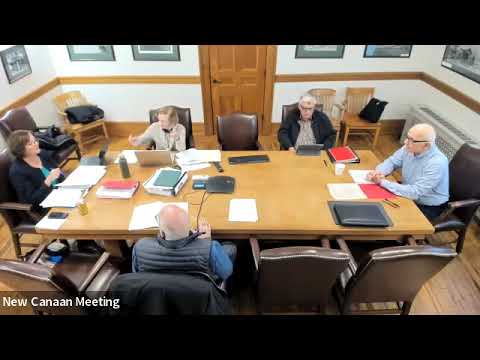
After a presentation from the town clerk (Claudia), Group 1 discussed whether the town clerk's office should remain elected or become appointed and whether to lengthen the statutory default two-year term; members noted the statute allows terms of 2—6 years and several favored 4 years for stability.
Group 1 devoted extensive time to the role of the town clerk after referencing a presentation given by Claudia, the town clerk. Members raised questions about the clerk's hours of operation relative to other town services, online availability of land-use records and redaction/privacy practices, pay-setting for assistants, and recruitment challenges for the position.
Several commissioners discussed structural options. One member noted that state statute allows a town clerk term between two and six years and that, absent a local decision, the term defaults to two years. That member said the commission could specify a longer term in the charter and several commissioners expressed support for increasing the term to four years to encourage recruitment and provide continuity. "We have the option to increase the term up to 6 years because the charter says the term of the town clerk shall be as per the general statute," one member said.
Participants also considered whether a town clerk must be an elector of the town. Some members favored requiring residency/elector status to ensure local accountability; others worried this could narrow the candidate pool for a technically complex full-time role. The group discussed trade-offs between elected and appointed status: elected status provides a direct democratic check while appointment could allow the town to recruit professional candidates.
The group asked Claudia to provide written answers to a set of follow-up questions about operations, hours, compensation, and records. Commissioners agreed to circulate questions and suggested that a subgroup gather factual data about comparator towns and term lengths prior to advancing a formal recommendation to the full CRC.