Get Full Government Meeting Transcripts, Videos, & Alerts Forever!
Get email alerts on the Long Term Care Transparency topic
No spam. Unsubscribe anytime.
Committee advances bill requiring long‑term‑care websites to link to state ombudsman; adds GLP‑1 language
Summary
A Human Relations & Aging committee hearing on HB 906 centered on requiring long‑term‑care facility websites to link to the Georgia Long Term Care Ombudsman Program with a required explanatory statement; members also clarified adding GLP‑1 drugs to medications certified medication aides may administer and debated penalty language and enforcement.
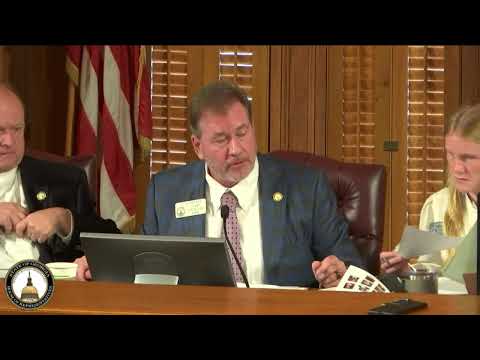
At a meeting of the Human Relations & Aging committee, lawmakers considered HB 906, a bill that would require long‑term‑care facilities that maintain websites to post a link to the Georgia Long Term Care Ombudsman Program and, in the same bill, add GLP‑1 medications to the list of drugs certified medication aides may administer in certain facilities.
Representative Smith presented the bill, calling it “a straightforward bill that requires long term care facilities that maintain a website to post a link to the official website of the Georgia Long Term Care Ombudsman Program.” He told the committee the bill includes an effective date of 01/01/2027 and a clarified penalty structure in the draft: a first violation would prompt a written warning, a second violation a $100 fine and third and subsequent violations $200; broken links alone would not carry penalties, and the bill would not authorize license revocation. Smith also said compliance would be handled through the Department of Community Health’s existing oversight procedures.
The state long‑term care ombudsman, Ms. Melanie McNeal, told the committee she has not seen facilities fined for not having posters and urged lawmakers to avoid a statutory formulation that could confuse residents. “My concern is that when people are looking for an independent advocate, they’re not gonna see that on the website. All they’re gonna see is a link,” McNeal said, arguing that a bare link could lead residents to believe the ombudsman is affiliated with the facility. She asked for a statutory requirement that the link be preceded by standardized explanatory language stating the Long Term Care Ombudsman Program is a federally authorized, independent program that helps residents resolve complaints, that services are confidential and free, and then the program website link; she advised against including phone numbers because they change.
Committee members also questioned how fines would be calculated, whether there would be an appeals process and whether violations would be publicly reported in a manner similar to a health or inspection score. Representative Frey proposed a friendly amendment to give facilities a quarterly (three‑month) correction window before enforcement escalates. Lawmakers clarified the GLP‑1 language applies to certified medication aides in assisted living communities and personal care homes; skilled nursing facilities operate under different nurse‑staffing rules and were not the bill’s intended target for that change.
The committee adopted an amendment to require the explanatory statement before the link by voice vote; the transcript records affirmative “aye” responses and the chair’s confirmation that the change addressed McNeal’s concern. Members also discussed and placed a separate amendment on the record to strike the bill’s penalty section (lines 42–53) to return the measure to its original posture; the transcript records debate and voice votes but does not provide a clear, complete tally of that motion in the supplied segments.
Under the version discussed, the bill sets an effective date of Jan. 1, 2027, would leave enforcement with the Department of Community Health, and would add GLP‑1 agents to the list of medications a certified medication aide may give in specified settings under physician direction and protocol. The sponsor told the committee that further adjustments could be addressed in the Senate or when the bill returns to the House if the committee or staff identify inconsistencies with existing statutory language.
The committee proceeded with voice votes on the amendments recorded in the transcript and moved the bill forward for additional consideration; the transcript ends with the committee completing votes on the amendments and signaling next steps.