
Senate committee backs licensing, school buffers and fines for vape retailers in amended SB 221
Get AI-powered insights, summaries, and transcripts
Subscribe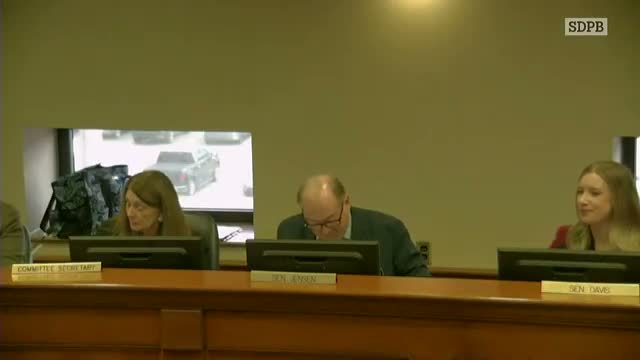
Summary
After extensive stakeholder testimony, the Senate committee approved SB 221 with a large amendment to license retail nicotine products, require inspections and create school buffers; proponents cited youth access and unsafe products, opponents warned of vagueness and business impacts.
Pierre — The Senate Health and Human Services Committee voted to send Senate Bill 221, as amended by 221A, to the floor with a due‑pass recommendation after testimony from public‑health groups, trade organizations and retailers.
Senator Chris Carr (District 11) presented the amendment, which would require retailers selling nicotine products to obtain a state license (tiered fees: $500 for specialty vape shops, $250 for general retailers), create a public license registry, require inspections at least once every 24 months, ban vending-machine and online/app‑based sales, prohibit free samples, and impose escalating penalties including suspensions and revocations for repeated violations. The amendment also includes a 500‑foot buffer from schools, mandatory signage, and prohibitions on marketing practices that appear targeted to minors.
“Disposable vape market has exploded with minimal oversight,” Carr said while introducing the amendment, and he told the committee the approach balances enforcement funding, transparency and retailer fairness.
Public‑health advocates supported the plan. Jennifer Stallion, representing the American Heart Association and the South Dakota Nurses Association, said nearly 25% of state high‑school students use at least one affected product and called licensure a proven tool to reduce youth access. Angela Kennecke of the EMILY’s Hope Youth Prevention Coalition reported local reviews that found multiple vape shops near schools and cited an attorney‑general sting that turned up unsafe and illegal products.
Industry witnesses split. Sam Nelson (Vapor Technology Association) said licensure can improve oversight and prevent youth access. But retailer groups and store owners — including Jordan Mason and Caleb Rose — criticized the amendment as overly broad and legally vulnerable, raising concerns about vague definitions (for example, a clause that could capture non‑nicotine components), excessive fines, and new zoning/regulatory burdens for longstanding retailers. Bill Van Camp (South Dakota Retailers Association) noted federal age‑21 sale requirements and questioned whether additional state licensure for long‑time sellers is necessary.
The Department of Revenue signaled neutrality but warned that administering licenses, inspections and enforcement will require staffing and resources; the amendment proposes fee revenue to create a dedicated enforcement fund and Carr estimated $400,000–$650,000 in fee receipts to staff the department.
Committee action: Senator Davis moved SB 221 as amended to the floor with a due‑pass recommendation. The committee recorded the vote in favor (7 yeas) and advanced the bill to the Senate floor.
What’s next: SB 221 will proceed to the full Senate calendar. Sponsors said they expect to continue technical work as the bill moves through the process; opponents asked for more time to refine definitions to avoid unintended regulatory capture of non‑nicotine products or retail components.
(This article is based on in‑committee testimony, motions and roll‑call recorded during the Senate Health and Human Services Committee meeting.)