
Senate committee advances $75 million emergency rental assistance bill after debate over eligibility
Get AI-powered insights, summaries, and transcripts
Subscribe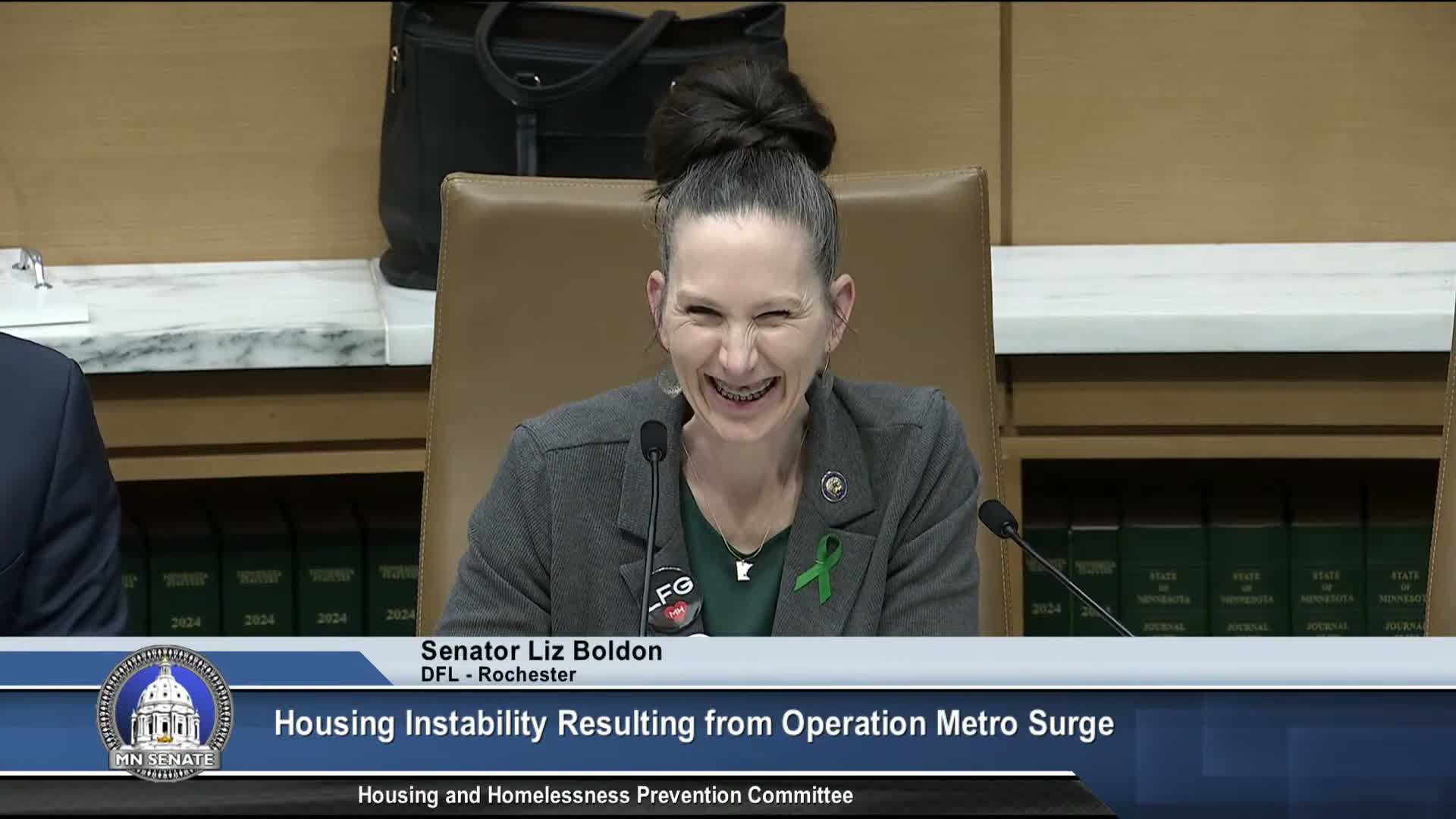
Summary
The Senate Housing and Homelessness Prevention Committee voted to advance SF 3596, directing $75 million in one‑time emergency rental assistance to counties using the existing local homelessness‑prevention formula; an amendment to limit eligibility to people with 'lawful status' failed on a recorded roll call.
The Senate Housing and Homelessness Prevention Committee on Feb. 3 advanced Senate File 3596, a one‑time allocation of $75 million for emergency rental assistance to be routed through the Department of Revenue and distributed to counties using the existing local homelessness‑prevention aid formula.
Chair Port, the bill’s author, said the money is intended as an emergency stop‑gap to stabilize families facing eviction after recent federal actions have disrupted incomes and local services. "This is an emergency fix likely for the next three months," Port said, urging rapid distribution while longer‑term solutions are pursued.
Senator Lucero offered an A2 amendment that would have replaced the bill’s existing residency language with a requirement that recipients have "lawful status" in the United States, arguing limited funds should prioritize those with lawful status. Opponents, including Chair Port and several other senators, said the change would exclude many mixed‑status families and people whose legal status can be fragile. The committee granted a roll‑call on the amendment; the clerk recorded 3 ayes and 6 nays and the A2 amendment failed.
A broad coalition of nonprofit leaders, county officials and people with lived experience testified in support of the bill. Stephanie Lewis of Greater Twin Cities United Way reported a spike in rental assistance requests to the statewide 211 helpline and called state dollars necessary to prevent emergency shelter entries. Hennepin County Board Chair Irene Fernando testified that county systems like Rent Help Hennepin have prevented thousands of evictions but lack the statewide capacity needed if federal funding does not materialize.
Advocates described real‑world impacts: organizers and mutual‑aid groups reported that local funds have been exhausted rapidly and that many households have lost work or limited their movement because of safety fears tied to immigration enforcement activity. Researchers with the Center for Urban and Regional Affairs estimated substantial excess rent debt tied to recent events, warning that limited philanthropic resources cannot meet the scale of need.
A motion to recommend SF 3596 as amended passed on a voice vote and the bill was recommended to be re‑referred to the committee on taxes. Committee members stressed that this allocation is an emergency measure, not a permanent solution, and that reporting requirements included in the amendment are intended to provide oversight of how funds are spent.
What happens next: SF 3596 will move to the taxation committee for further consideration and implementation planning. Committee members said they expect additional agency briefings and continued oversight on distribution and reporting.