Get Full Government Meeting Transcripts, Videos, & Alerts Forever!
Get email alerts on the Disaster Recovery topic
No spam. Unsubscribe anytime.
Washington County Board approves emergency declaration, $600,000 in relief and debris contracts after floods
Summary
Washington County supervisors declared a local emergency, approved emergency debris-hauling contracts and reallocated $600,000 in ARPA funds — $400,000 for emergency management and $200,000 for small-business relief — and set up a county disaster relief fund to accept public donations.
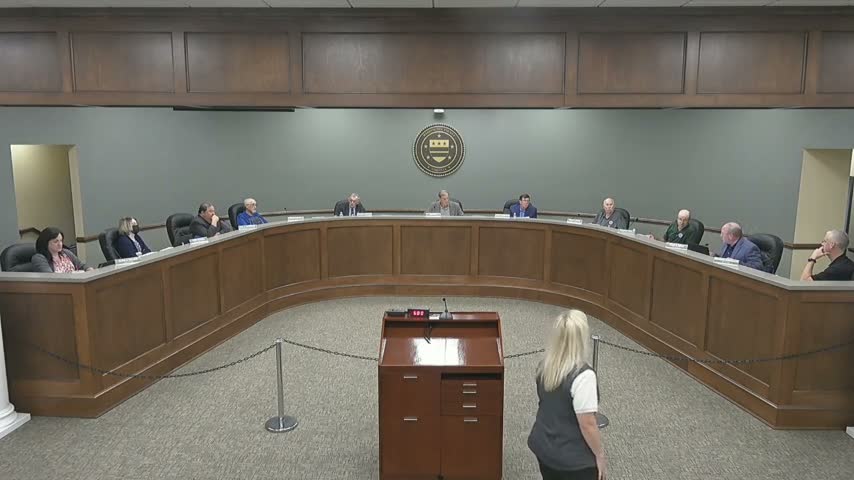
Washington County’s Board of Supervisors approved a package of emergency measures on a single evening following destructive flooding in Damascus, Taylors Valley and Green Cove. The board declared a local emergency covering the Sept. 27 start of response activity through Dec. 31, 2024, authorized emergency debris‑hauling contracts and reallocated $600,000 in ARPA funds: $400,000 for emergency management costs and $200,000 for a small‑business relief program.
The action came after an extended briefing from staff detailing mutual aid, prepositioned resources and recovery needs. Mr. Berry told the board, “we've had a most eventful 11 days,” and credited mutual aid from neighboring localities, state crews, the governor’s office and nonprofit partners for rapid response. County attorney Mr. Snodgrass advised the board that the declaration enables use of tax‑relief provisions in “Virginia code section 58.1301” for personal property tax credits and reminded the board that real‑estate tax relief is provided through the county code.
The board approved emergency procurement of waste‑hauling services to remove debris from Taylors Valley and other affected areas. County counsel and procurement staff presented two emergency contracts and included FEMA language required to preserve eligibility for federal reimbursement. Mr. Snodgrass summarized FEMA’s role plainly: “FEMA is not a lifeboat, it’s a life jacket,” cautioning that federal aid has limits and that local applications must document losses.
To speed local recovery, supervisors also approved creation of a County Disaster Relief Fund. Staff reported more than $20,000 in donations to the account, which was reopened in the county’s CARES‑Act account at First Bank and Trust. The board authorized the fund’s use to augment the $200,000 small‑business relief tranche; staff said an online rolling application will allow awards up to $5,000 initially.
Board members discussed operational lessons learned, including the need for community‑center generators, improved radio/CAD interoperability, and local swiftwater rescue capacity. Several supervisors urged a formal after‑action review and the creation of dedicated long‑term recovery committees to focus on the Creeper Trail restoration and countywide infrastructure resilience.
The board voted to adopt the emergency resolution, approve the waste‑hauling contracts with signature authority for county staff, reallocate ARPA funds, and formally establish the County Disaster Relief Fund. Staff said the small‑business application and public information would be rolled out the following morning. The resolution includes time‑limited application windows and references the FEMA individual assistance application deadline noted by staff.