Get Full Government Meeting Transcripts, Videos, & Alerts Forever!
Get email alerts on the Creeper Trail Recovery topic
No spam. Unsubscribe anytime.
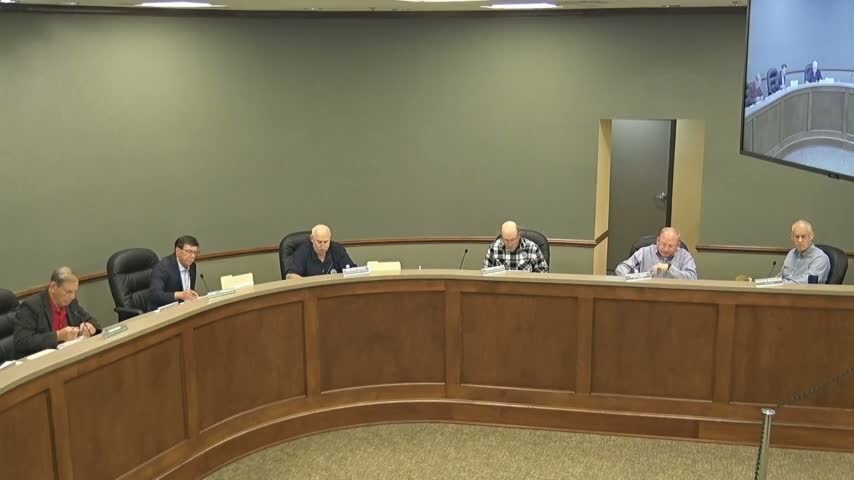
Washington County supervisors weigh limited role in Creeper Trail recovery after Damascus flooding
Summary
Supervisors discussed commissioning a limited, data‑driven assessment and possible emergency procurement to explore temporary trail options after floods destroyed multiple trestles near Damascus; officials emphasized coordination with the U.S. Forest Service and state recovery staff and said no formal action was taken tonight.
Supervisor Berry told the Washington County Board of Supervisors on Oct. 29 that severe flooding in the Damascus area (zip code 24236) washed out multiple trestles on the Creeper Trail and left the local tourism economy at risk. He outlined an option for the county to fund a limited, emergency assessment and planning effort to explore temporary trail alignments that could reopen segments of the route for riders and visitors.
Why it matters: The Creeper Trail is a key driver of tourism in the region. Berry cited county tax data and local business concerns — including a 2024 tax contribution of nearly $1.4 million from the 24236 ZIP code — to argue for an urgent but narrowly scoped intervention to restore economic activity while federal and state repairs proceed.
What was proposed: Berry said the county already has a recreation‑study contract with consultant Barry Dunn and asked whether that contract could be modified to procure a short‑term emergency assessment. He presented a consultant scope from a firm identified in materials as Tool Design and said the “fully loaded” estimate for a comprehensive, multidisciplinary assessment was about $305,000 but could be reduced depending on scope and partner contributions. He framed the county’s potential role as a limited, data‑driven facilitator rather than the lead implementer.
Coordination and funding channels: Board members emphasized that the U.S. Forest Service controls the trailbed on federal land and would make final choices about trestles and permanent repairs. Mr. Berry and others said the county would need buy‑in from the Forest Service and state recovery staff. Berry said Kim Davis, director of Friends of Southwest Virginia, has been designated by the Virginia Department of Housing and Community Development as a point of contact for an Appalachian Regional Commission announcement of $1,300,000 to be spread across 16 localities for outdoor recreation; Davis is evaluating how that money might be applied.
Immediate local relief and limits: Berry reported the county’s small‑business relief program issued roughly $311,601.40 in two rounds to 58 businesses in the Damascus ZIP code — an average of about $5,500 in most cases — and said those funds target business continuity while broader trail recovery is planned. Board members repeatedly stressed the county lacks authority to direct the Forest Service but said a consultant’s data would give Washington County a seat at planning tables and credibility with state and federal partners.
Board decision and next steps: The board did not take formal action to commit county funds to a trail design or reconstruction tonight. Berry said he will continue coordinating with Chief Ward, the governor’s recovery and rebuilding officer, and with Ms. Davis at DHCD; a follow‑up call was scheduled and Berry said he would report back to the chairman. Several supervisors urged a single coordinating entity to avoid fragmented fundraising and planning.
Quotes: “We don’t want a leadership role but only a facilitator potentially in a very limited capacity to get the ball rolling,” Berry said. “If this is something everybody wants us to do, obviously it would be a collaborative effort.”
What’s next: Berry said staff and county consultants will continue discussions with state and federal partners; he will brief the board if the county is asked to play a limited, funded role or to modify its contract to perform an emergency assessment.