Get Full Government Meeting Transcripts, Videos, & Alerts Forever!
Get email alerts on the Rezoning Clifton Stewart topic
No spam. Unsubscribe anytime.
Washington County supervisors postpone vote on 85-acre rezoning near I‑81 after residents cite stormwater and traffic concerns
Summary
After hours of public comment about springs, stormwater runoff and traffic, the Washington County Board of Supervisors voted to postpone a request to rezone roughly 85 acres near I‑81 Exit 22 from agricultural (A2) to industrial (M2) until the July 14 meeting to allow the Planning Commission and the General Assembly actions to proceed.
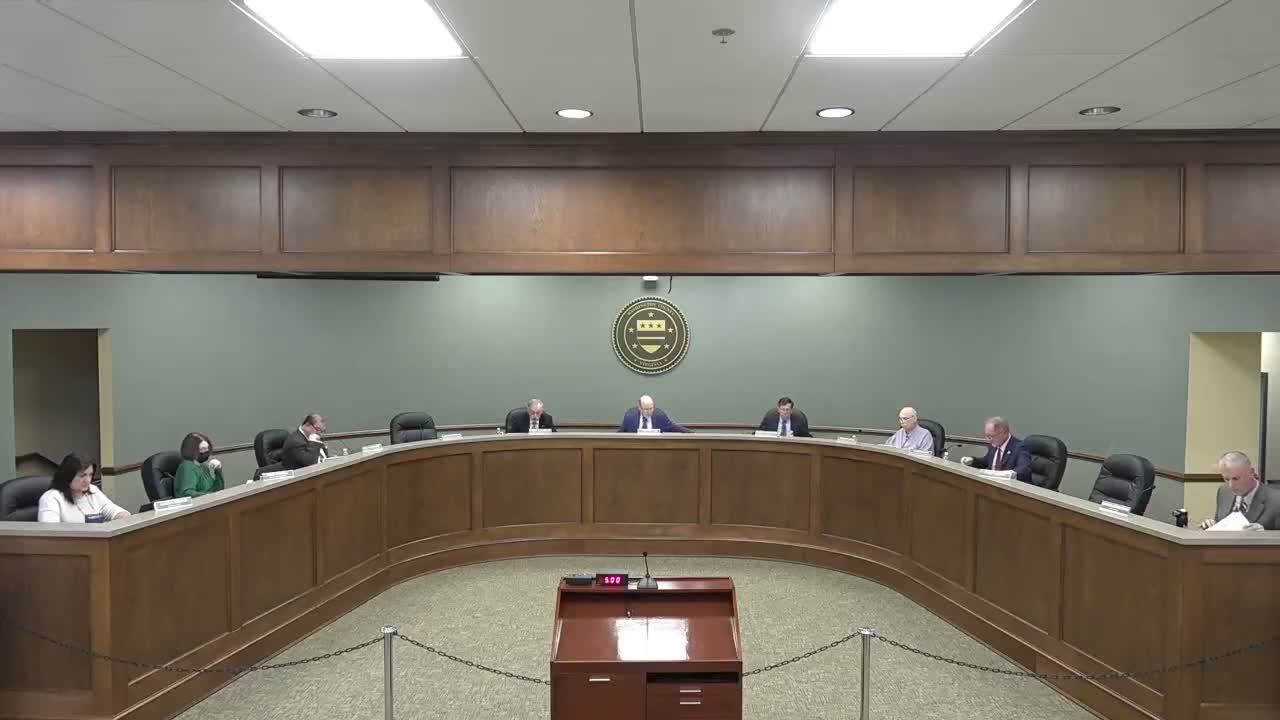
The Washington County Board of Supervisors on a motion to postpone chose not to act Tuesday on a request to rezone about 85 acres at 15054 Enterprise Road (near I‑81 Exit 22) from A2 agricultural to M2 industrial.
The rezoning, filed on behalf of Clifton Stewart/Clifton Sewer LLC, would have changed the property’s designation to allow industrial development adjacent to the interstate. County staff and Mr. Richardson presented a Thompson Litton site and feasibility package requested by the Planning Commission, noting the site’s interstate access and that the county’s 2014 comprehensive‑plan projections had shown commercial development for the corridor.
Several pro‑development speakers told the board the site offers a rare, buildable tract with interstate access that could bring jobs and tax revenue. Sean McMurray, executive director of the Wellspring Foundation of Southwest Virginia, told supervisors the comprehensive plan already identified the Exit 22 corridor for commercial development and urged the board to support responsible growth. Attorney Philip Herold said the site’s interchange location made it attractive to employers and said the county must compare alternatives across the county rather than decide in isolation.
Opponents—many living on or near Enterprise Road—pressed the board to delay any rezoning because of stormwater, traffic and property impacts. Sam Rayburn, whose driveway would parallel the proposed entrance, said grading and retention ponds described in engineering materials risked destroying family springs and could divert ‘thousands and thousands of gallons of dirty water’ onto his land; he also cited an approximate $12 million development cost, which he described as an estimate. Libby Owens, a nearby business owner, described frequent high‑speed traffic and localized flooding she has observed for 25 years. Wayne Thomas emphasized agricultural impacts and questioned sewer and traffic capacity estimates, including a referenced $3.7 million sewer overhaul figure in the Thompson Litton report.
Supervisors weighed those concerns, the lack of a Planning Commission recommendation (the planning commission had asked for additional studies and had not completed action because of prior scheduling and quorum issues), and pending General Assembly developments that could affect Oak Park and related infrastructure planning. On motions from board members the supervisors agreed to table the application until their first meeting in July (July 14) so the Planning Commission can act and the board can review additional information.
The board framed the delay as an information‑gathering step rather than a denial; the chairman said the pause would allow more community feedback and technical answers to questions about road improvements, stormwater mitigation and sewer capacity.
What happens next: The Planning Commission will consider the materials it requested; the board will revisit the rezoning petition at its July 14 meeting. The motion to postpone was made and seconded and discussed on the record.