Get Full Government Meeting Transcripts, Videos, & Alerts Forever!
Get email alerts on the Securitization topic
No spam. Unsubscribe anytime.
PacifiCorp outlines securitization tool to speed recovery of prudently incurred utility costs; stakeholders seek guardrails
Summary
PacifiCorp staff presented securitization as a means to recover prudently incurred costs (storms, wildfire mitigation) via AAA‑rated bonds backed by non‑bypassable customer charges; consumer advocates urged tight limits and PSC process protections and the committee deferred action pending further drafting.
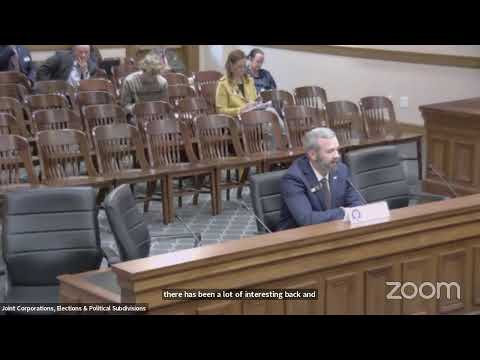
PacifiCorp representatives briefed the joint interim Corporations, Elections & Political Subdivisions Committee on securitization on Oct. 22, describing a statutory tool that would let utilities issue bonds secured by a non‑bypassable customer charge to accelerate recovery of prudently incurred costs.
PacifiCorp’s Nikki Cablia told the committee securitization is intended for extraordinary, one‑time costs—examples include storm recovery or wildfire mitigation—and can lower financing costs because rating agencies treat the dedicated customer charge as a highly certain repayment stream. "Securitization... [lets you] get some cash perhaps sooner than the company would have recovered under normal rate making," she said, and contrasted hypothetical AAA bond rates with PacifiCorp’s weighted average cost of capital.
Stakeholder concerns: consumer advocates and industrial energy customers urged strict statutory limits and consumer protections. Thor Nelson (Wyoming Industrial Energy Consumers) and Anthony Ornelas (Office of Consumer Advocate) recommended limiting eligible costs, requiring demonstrable, quantifiable customer savings versus traditional ratemaking, and extending PSC notice and contested‑case timelines. PSC staff flagged a compressed 45‑day approval window in the draft as unrealistic for complex contested cases and recommended allowing extensions and full intervention rights.
Legal and practical matters discussed included whether existing statute (Wyo. Stat. § 37‑6‑102) already provides a path for some financing, whether securitization binds future commissions, and how to allocate costs where utilities operate across multiple states. PacifiCorp representatives said other states (California, Oregon, Idaho, Missouri) have securitization statutes and that the tool had not yet been used in all their jurisdictions but could be useful if drafted with appropriate protections.
Outcome: committee members and stakeholders agreed securitization merits further study but raised material drafting issues (scope of eligible costs, consumer protections, PSC process, allocation across multi‑state systems). The chair proposed a working group rather than moving the draft as a committee bill at this time.