Get Full Government Meeting Transcripts, Videos, & Alerts Forever!
Get email alerts on the Post Election Audit topic
No spam. Unsubscribe anytime.
County clerks ask lawmakers to study post‑election hand audits, back audit working group
Summary
Platte County Clerk Malcolm Irvin and the County Clerks Association urged the Corporations, Elections & Political Subdivisions Committee to form a stakeholder audit working group before imposing statewide hand‑count requirements, citing unanswered questions about sampling, ballot styles and timing.
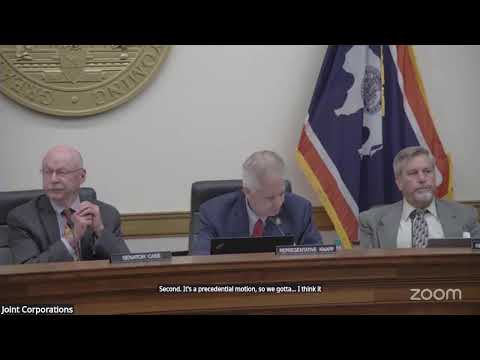
Platte County Clerk Malcolm Irvin, speaking for the County Clerks Association, told the Joint Corporations, Elections & Political Subdivisions Committee that election‑audit bills under consideration raise many operational questions and should be studied by a formal working group.
"Hand count audits help make sure election outcomes accurately reflect the will of the voter," Irvin said, and he urged lawmakers to include clerks, the secretary of state’s office and municipal and special‑district officials in any review. Irvin said Wyoming election law already requires clerks to perform post‑election audits that compare ballot images to cast‑vote records, and that lawmakers must decide whether a statewide approach should use a fixed percentage sample, a risk‑limiting audit or a cross‑tabulation method that uses a different tabulator.
Irvin flagged practical implementation questions that he said justified caution: which ballots should be included (absentee, UOCAVA, vote‑center ballots), how to avoid identifying voters from small‑style samples, when audits should occur, how counties should publicize results and what hand‑count methodology to use. He also recommended shifting some statutory dates to allow counties time to program, test and print ballots if new requirements are adopted.
The committee adopted a motion to sponsor 26LSO0043 (random hand‑count audits) with an amendment changing the effective date to July 1, 2026. Members debated sample size and the logistics of selecting precincts at random; concerns were raised during public testimony that a strictly random pick could select precincts with few or no ballots, or precincts with split ballot styles that raise privacy issues.