
Litchfield board weighs $3.9 million in budget cuts, tables decisions until full board meets
Get AI-powered insights, summaries, and transcripts
Subscribe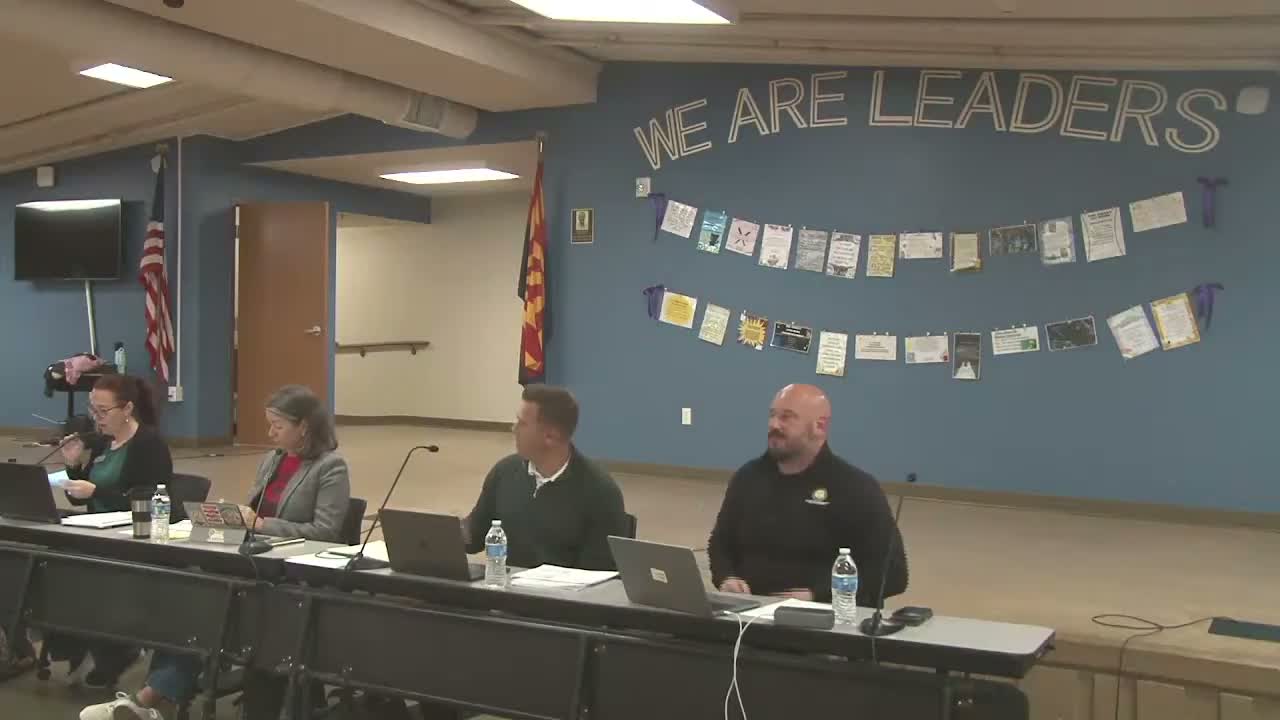
Summary
At a Feb. 19 special meeting, Litchfield Elementary School District leaders outlined proposals to close a $3.5M–$5.5M shortfall for 2026–27 — including modest class‑size changes, reduced campus support FTEs, calendar adjustments and raises — and voted to table action until the full five‑member board is present.
The Litchfield Elementary School District Governing Board on Feb. 19 discussed administrative proposals to cut roughly $3.9 million from the 2026–27 budget and voted to delay formal action until the full five‑member board can meet.
CFO Vaughn told trustees that, depending on special‑education revenue assumptions, the district faces a next‑year shortfall that could range from about $3.2 million (with projected special‑education growth) to as much as $5.4 million if those revenues do not materialize. "Based on these projections, we believe we should reasonably be targeting $4.5 to $5.5 million of reductions," Vaughn said, and presented a menu of levers administrators say can reach roughly $3.9 million in savings under the recommended mix.
The presentation broke the options into district‑level reductions, certified‑support staffing changes, class‑size adjustments and calendar or raise changes. Vaughn said district‑level and department reductions identified to date total about $687,000 and that a tightened implementation of current class‑size staffing standards could produce savings similar to raising targets by one student, depending on how the standard is applied.
The administration proposed a "new option" that keeps the board's current target class sizes but tightens the initial staffing trigger (moving the trigger from 1.5 to 2.5 students above target), and introduced a short‑term excess class stipend — $1,200 per semester, prorated — as a possible way to defer adding staff midyear. "By having the stipend be by semester, this aligns well with the concept of a new teacher starting at the semester break if needed," Vaughn said.
Several teachers and program staff urged caution. "According to slide 36, an experienced teacher like myself makes over $90,000 a year as a base," said Elizabeth Espie, a seventh‑grade ELA teacher at Belen Soto Elementary School, calling the figures "absolutely incorrect" and asking the district for transparency about how the numbers were calculated. Elizabeth Warren, a veteran teacher, urged the board to "protect teacher salaries and maintain manageable class sizes" and suggested looking first at district‑office redundancies before cutting school‑level posts. Marcia Hale, an EL teacher, warned that reducing certified ELD positions or translation services would harm high‑needs English‑learner students.
Board members debated tradeoffs between protecting campus supports and pursuing larger system‑wide changes. "I would rather see something like that — inching our way towards these changes — because I think that's probably the healthiest and most easily tolerated way to do that," Board Member Moran said of a phased approach. Board Member Owens said he favors a larger class‑size change paired with pay protections: "If you're taking on more kids, let's give you some more money," he said, arguing stipends and scheduling could soften the impact.
Administrators flagged additional variables: benefits renewals are due March 1 and will affect take‑home pay, and some Title I site‑based funds can be repurposed at qualifying campuses to restore positions if the board narrows district allocations. Executive Director Satterfield said delaying decisions would compress the district's staffing timeline: principals need staffing sheets and must begin staffing meetings so contracts and notices can be produced in time for a March 16 deadline.
Faced with divergent views and one absent board member, Board Member Mikes moved to table action items 5.1 and 5.2 until the board's next scheduled meeting when all five trustees are expected to be present. The motion passed on a voice vote of the members present. (Board Member Moran, Board Member Mikes, Board Member Owens and the presiding Board President voted "yay".) The board then voted to adjourn.
What happens next: the administration said it will continue to refine numbers, provide additional scenarios (including one that would avoid increasing middle‑school averages), and prepare staffing sheets and contract materials for the meeting when the full board reconvenes. The board left the substantive decisions — class‑size targets, certified‑support allocations and raise level — for the next meeting.
— Executive Director Satterfield told the board staff will proceed quickly once direction is given but noted the timing affects contract production and principal review of staffing.