Get Full Government Meeting Transcripts, Videos, & Alerts Forever!
Get email alerts on the Zoning Regulation Changes topic
No spam. Unsubscribe anytime.
Reno County planning board to tackle parking standards and wording cleanup
Summary
Reno County planning advisory board voted to begin two near-term zoning updates: tighten or clarify parking and loading-space requirements to reduce routine waivers, and perform a general cleanup of definitions and a small fix to subdivision Article 4; staff will research options and return with drafts.
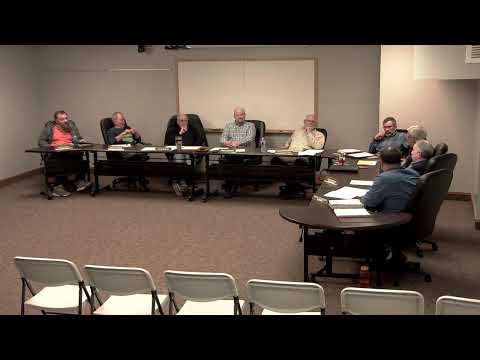
The Reno County Planning Advisory Board agreed to focus its next round of zoning changes on parking and loading-space standards and a general cleanup of definitions.
Planning staff told the board that repeated waiver requests for parking, paving and loading-space rules are common and that clarifying the regulations could reduce time-consuming exceptions. "The parking and loading space requirement is kinda aggravating to me a little bit," planning staff said, adding that the board’s standards are a benchmark applicants consult and that reasonable flexibility could cut unnecessary public hearings.
Why it matters: parking and loading rules affect whether new businesses and conditional uses must seek waivers or variances, which triggers extra application fees and public hearings. Staff said a clearer standard could allow routine cases to proceed administratively while preserving the board’s ability to require stricter measures where neighbors or safety concerns justify them.
The board also instructed staff to pursue a general review of the code’s definitions and to correct a mismatch between Article 4 of the subdivision regulations and Article 13, which currently contain inconsistent lot-width and depth language. Planning staff described the Article 4 fix as "an easy fix" but one that should be made to avoid conflicts across the regulations.
The board discussed related topics including private versus public roads, short-plat approaches for small splits, and the county’s rule that generally allows one lot split per 40 acres without full subdivision review; staff noted that further divisions typically trigger rezoning or platting, drainage plans and road construction requirements. "When you split that, that locked that parcel down until you rezone and plat," planning staff said when explaining the effect of a prior split.
Board members asked staff to research neighboring counties’ approaches and to return with draft language. Staff said parking/loading and the Article 4 cleanup were the quickest items to prepare and aimed to present drafts by April if schedules allow. The board did not vote on ordinance language; it set work priorities and directed staff research as next steps.