
Panel Hears Bill Letting Local Governments Tie Development to Infrastructure
Get AI-powered insights, summaries, and transcripts
Subscribe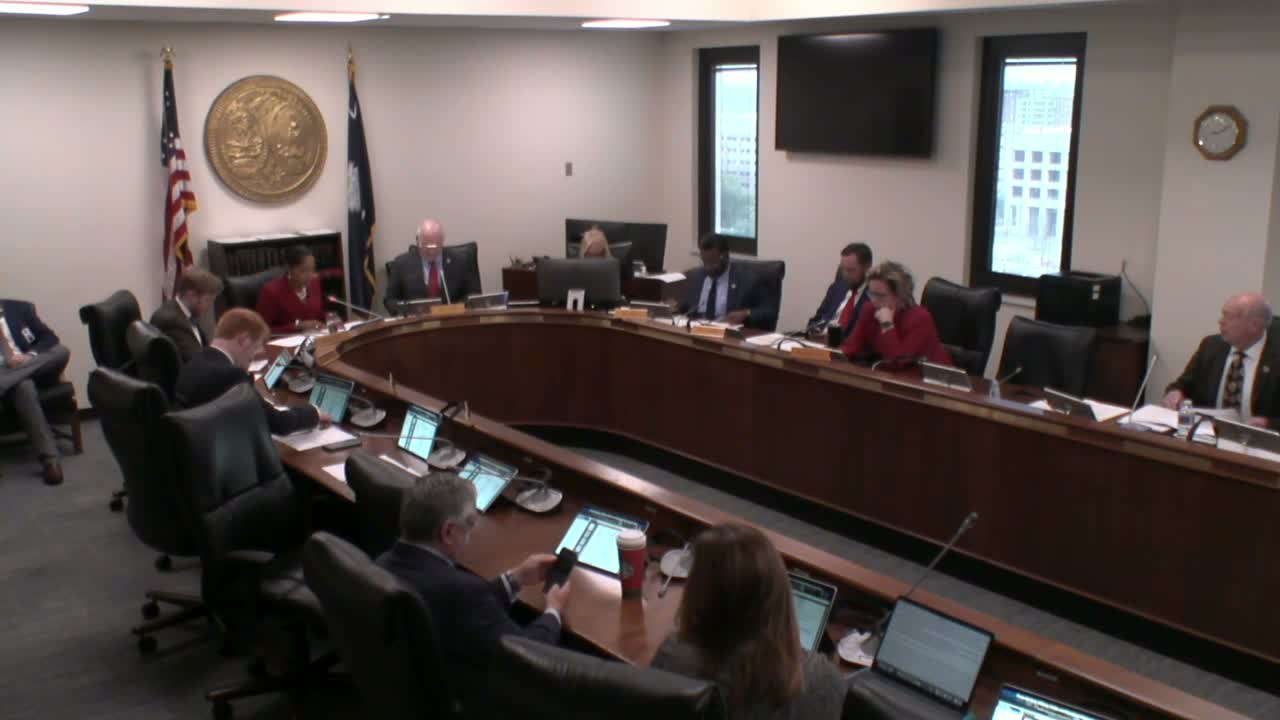
Summary
The Municipal Affairs Committee considered House Bill 4050, which would allow cities and counties to adopt optional 'concurrency' programs requiring adequate public facilities before new development proceeds. Supporters said it gives local governments planning tools and legal cover; builders warned it could add costs and delays for housing.
COLUMBIA — The Municipal Affairs Committee on Tuesday heard testimony on House Bill 4050, a measure that would authorize local governments in South Carolina to adopt optional "concurrency" programs tying development approvals to the availability of public facilities such as roads, sewer, water and schools.
Representative Wetmore, the bill’s sponsor, said H.4050 is "permissive" and would "allow" local governments to adopt concurrency programs if they choose, while building in guardrails such as capital-planning requirements and proportionate-share methodologies. She told committee members the bill aims to create a predictable framework so local officials and developers can negotiate improvements rather than resorting to moratoria or ad hoc charges.
The measure prompted sharply divided testimony. Tyson Smith, the bill’s drafter, described concurrency as "a timing and phasing tool. It's not a funding tool," and said he deliberately kept statutory language nonprescriptive so local governments could adopt details through ordinances and manuals and remain within established legal limits. Emily Poole of the South Carolina Environmental Law Project said passing H.4050 would give counties and cities an explicit "green light" — legal authorization that many local governments lack — to pursue concurrency programs.
Developers and builders warned the new authority could increase costs and slow projects. Mike Satterfield, who said he has built homes in the state for 47 years, said his team had been "in the tenth month working on concurrency" on a current project and described delays and up‑front expenses for sewer, water and traffic studies. Mark Nicks of the Homebuilders Association said South Carolina is already underbuilding affordable entry-level housing and warned that new fees could push home prices higher; he cited a median new-construction price he said exceeds $400,000.
Local officials and residents described tensions that the bill seeks to address. Samantha Melamed, an Aiken County resident, said wastewater capacity is stretched in her area and recounted a development denial that led to a developer suing a city for $40,000,000. David Chinnis, Dorchester County Council chairman, urged the committee to provide a "toolbox" to help counties manage growth without repeatedly incurring legal defense costs.
Supporters including conservation and school-district representatives said the bill would help manage rapid population growth and ensure public facilities keep pace. Zach Buer of Conservation Voters of South Carolina told the panel that nearly 80,000 people have moved to the state in the prior year and urged officials to recognize public demand for growth management; Debbie Elmore, speaking for local school districts, asked for an amendment to ensure school boards have access to capacity data when local governments adopt concurrency rules.
Committee members asked whether developer charges would ultimately be passed to homebuyers and how the rules would apply to different land uses, including data centers and manufacturers. Representative Wetmore said ordinances could limit application by size or project type and that the process is intended to produce quantifiable, transparent level-of-service standards so developers have advance notice of deficiencies.
The committee did not vote on H.4050. Chairman Joe Bustos adjourned the hearing early because members needed to return to House proceedings; several witnesses on the sign-up list were not heard and the panel said it would schedule further testimony at a later date.