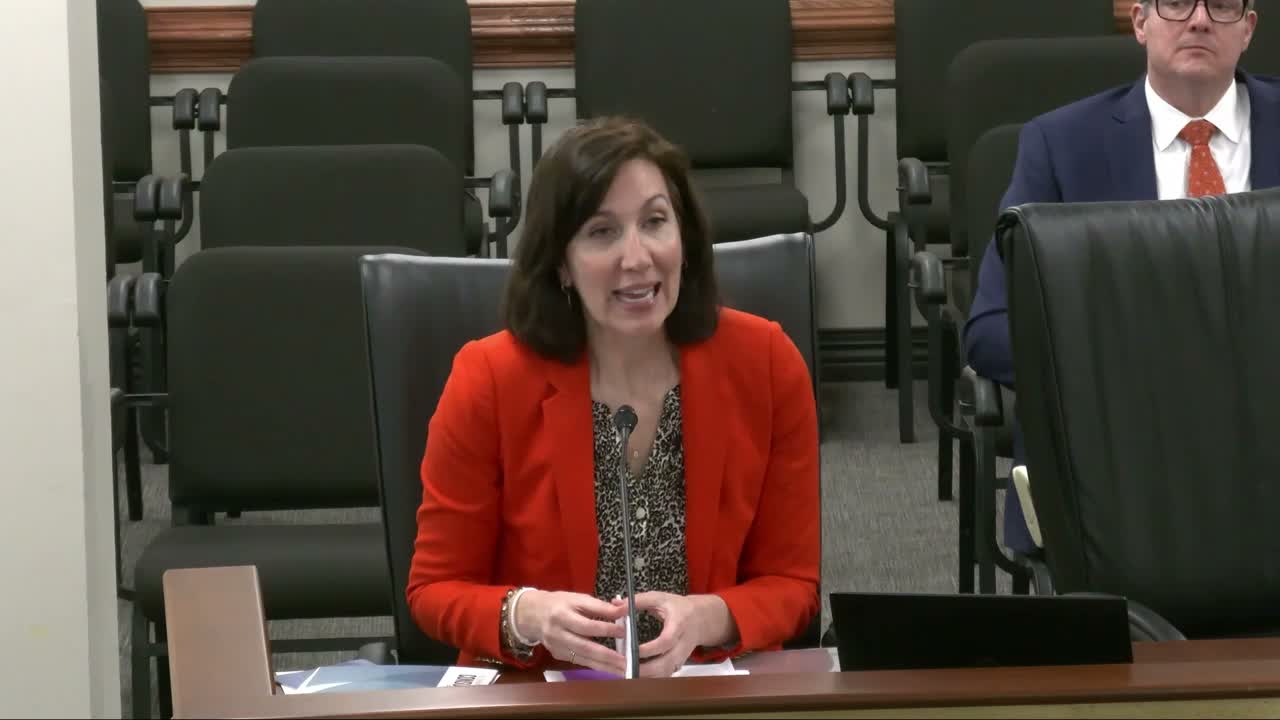
Department of Consumer Affairs reports complaint surge, seeks funds for technology and outreach
Loading...
Summary
Department of Consumer Affairs administrator Carrie Lybarger told the subcommittee the agency has seen a large rise in complaints (a 74% increase over five fiscal years), has secured significant consumer credits and refunds, and is requesting funds for increased shared‑service costs, software subscriptions and outreach work including a marketing strategy contract.
Carrie Lybarger, administrator and consumer advocate for the Department of Consumer Affairs, reported a marked increase in consumer complaints and asked the subcommittee for resources to handle the volume and outreach needs. Lybarger said the department has seen a 74% increase in complaints over the last five fiscal years, more than 1,000 complaints so far this fiscal year (about 40% higher than the year before) and cited almost 7,000 complaints in the most recent calendar year (transcript wording ambiguous). She added that DCA obtained over $1,500,000 in consumer credits, refunds and adjustments through its voluntary mediation process last year.
To manage the workload, DCA asked for one general‑fund appropriation and other‑fund authorizations to cover increases in shared‑services charges from the Division of Technology Operations and rising software subscription costs. Lybarger said the agency had hired a marketing firm at the recommendation of the House Legislative Oversight Committee to develop a public awareness strategy; she identified the vendor as a state‑contract firm (Flock in Raleigh) and said the contract for the marketing strategy work was about $20,000.
When questioned by a senator from Pickens about complaint tracking and timelines, Lybarger described the intake and tracking process, which aims to close complaints in about 30 days on average. She said DCA usually forwards complaints to businesses within three business days and provides businesses roughly two weeks initially to respond, with audit and supervisory oversight of complaint closures.
Lybarger also discussed staffing: nine employees handle complaints, with four consumer complaint analysts plus two legal analysts (six complaint analysts total), and the complaint services area has experienced some turnover. She informed members of bill S697, which would transfer a partnership with United Way for a 2‑in‑1 system contract estimated at $1,200,000; she noted the governor included $200,000 in nonrecurring funds in his budget and that DCA has taken a neutral position on the bill. Lybarger offered to follow up on specific long‑duration cases.