Get AI Briefings, Transcripts & Alerts on Local & National Government Meetings — Forever.
Milwaukie council told Milwaukee Bay Park completion unlikely in 2027; staff outlines canopy, grants and Kellogg plans
Loading...
Summary
At the Feb. 17 Milwaukie work session, parks staff said substantial completion of Milwaukie Bay Park Phase 3 by 2027 is unlikely and outlined grant‑dependent funding, tree‑canopy tracking, Kellogg restoration design, and public engagement opportunities through Metro’s Community Choice program.
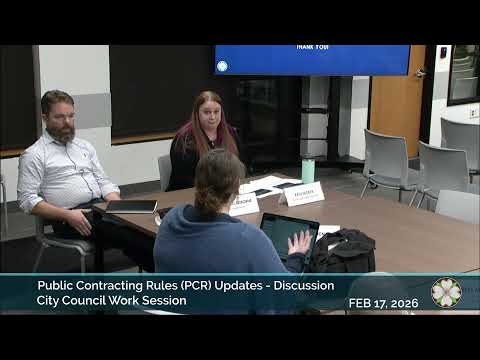
At a Feb. 17 Milwaukie City Council work session, Adam Moore, the city’s parks and green space development manager, told council members that ‘‘substantial completion by the 2027 is just not attainable’’ for Milwaukie Bay Park Phase 3 and that construction is more likely to start in mid‑2027 with completion in 2028–29.
The update covered the city’s targets for tree canopy, recent and upcoming park projects, grant and local funding for Milwaukee Bay Park, and the Kellogg restoration design. Moore and other staff highlighted data limits — the city’s available LiDAR is from 2019 and a refreshed dataset is expected in the fall — and emphasized that tracking will combine project‑level planting records with updated LiDAR.
Why this matters: Milwaukee Bay Park is a major downtown project staff and business leaders have tied to economic development. Council heard that timing and scope hinge on multiple reimbursable grants and intergovernmental agreements, meaning the city must coordinate design ownership, consultant contracts and grant match before committing to construction.
Moore said the city measures canopy both at the project level (for example, a recent three‑park project produced a net ‘‘30 plus’’ new trees and salvaged one mature tree that was relocated) and with LiDAR. He noted the 40% canopy target is aspirational and will require both planting and protection of existing trees; staff also cited ash die‑offs and other pests as complicating factors.
On Milwaukee Bay Park, staff reported the city currently has identifiable local commitments and grant prospects but not a full, unconstrained construction budget. The presentation listed roughly $225,000 in general fund, $1,650,000 in URA dollars and $750,000 in a proposed local share that would be reimbursable and subject to a Metro intergovernmental agreement. Staff also discussed NCPRD‑controlled sources, stating a total of roughly $4,859,704 in funds under NCPRD control that have been discussed for the project, and additional potential grants such as a Trolley Trail award of about $658,000. Moore emphasized many of those grants are reimbursable and will require matching funds and signed IGAs before money can be spent.
On fundraising and outside support, staff said the Milwaukie Park Foundation had raised about $65,000 to date for the project and that the city submitted a pre‑application to Metro’s Nature & Neighborhoods capital program for up to $2,000,000. Staff warned that some state and federal grant windows have later award dates (the federal grant program administered by the state was described as an April 2027 award cycle that requires a 1:1 match), complicating an aggressive 2027 construction schedule.
Moore also briefed council on the Kellogg restoration design, describing roughly 14 acres within the Kellogg Channel targeted for naturalization and habitat restoration and noting the design so far anticipates limited public access and community enhancements concentrated at adjacent Cromberg Park and Milwaukie Bay Park. He said the project team is focusing on a natural restoration approach and that fluctuating water levels will limit safe, unfettered public access in much of the channel.
Council members pressed staff on equity and access metrics. Staff pointed to Trust for Public Land data showing roughly 88% of residents within a 10‑minute walk of a park and said the city will cross‑check that dataset with internal analysis disaggregated by age and housing type to identify areas with unmet need, particularly a northeast park‑deficit quadrant. Staff raised shared‑use agreements with schools and churches as a potential near‑term option to increase resident access without acquiring new acreage.
Staff highlighted a Metro Community Choice workshop (noted in the presentation as tomorrow, 5:30–7:30 p.m. at the Ledding Library Community Room) where 11 projects will be discussed; they emphasized Metro manages that program and that ideas in the workshop can evolve through Metro’s public process.
Next steps: staff said the parks and green space management plan scope and an RFP for that plan are expected in spring, the naming subcommittee for two parks will move forward with public solicitation under the city naming policy, and staff will return with more detailed funding analyses and consultant contract recommendations that will be needed before final project budgets and construction schedules are set.
All direct quotes in this article are from the Feb. 17 work session transcript and are attributed to staff present at the meeting.