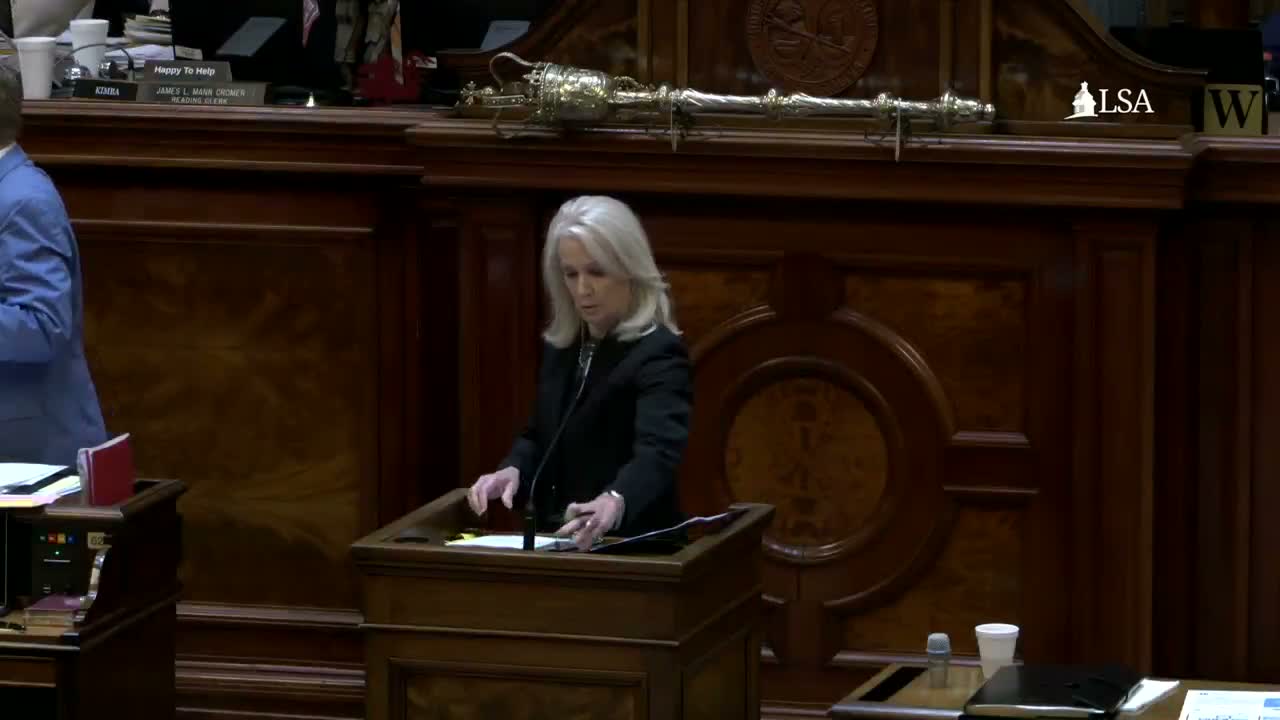
House advances Parental Rights Act after hours of debate and multiple amendments
Loading...
Summary
The South Carolina House approved second reading of the Parental Rights Act (H.4757) after extended debate and adoption of several amendments that add teacher protections, a child‑safety exception, an opt‑in for medical decision authority, and a tolling provision to protect statute‑of‑limitations rights.
The South Carolina House on Thursday advanced the Parental Rights Act (H.4757) on second reading after hours of debate and a series of amendments that tightened language on administrative remedies, teacher liability and child‑safety exceptions.
Chairlady Shannon Davis, the bill sponsor, said the measure “draws a clear line. Parents, not government agencies, have the primary authority to direct their children's upbringing, education, and health care.” The bill creates an administrative complaint pathway that must be exhausted before a private lawsuit and includes limits on damages and procedures for review by the State Board of Education.
Lawmakers argued chiefly over how the administrative process would interact with existing court deadlines. Representative Gary Hart asked whether following the administrative route could leave litigants without time to file suits under the two‑year Tort Claims Act period; Representative Scott Pope sponsored an amendment to toll the statute while administrative remedies are pending. That tolling amendment was adopted and added to the bill to preserve parents' future ability to sue if the administrative process exhausts the statutory filing period.
Lawmakers also debated teacher protections. Chairlady Julia Erickson described an amendment negotiated with teacher associations that retains a safe‑harbor for educators acting within their official duties and applies the South Carolina Tort Claims Act where appropriate. Erickson said the amendment requires “clear and convincing evidence” before a teacher could be found to have violated parental rights, and that only cases involving actual malice, fraud or crimes of moral turpitude would expose teachers to individual liability.
Representative Wetmore criticized the statutory damages provisions, warning national litigation groups profit from such claims, and noting, “The abortion bill was $10,000. This bill now creates $5,000.” Erickson and other supporters said the high evidentiary standards and administrative review protect teachers and reduce frivolous suits.
The chamber adopted a child‑safety exception clarifying that school personnel and medical staff are not required to disclose information to a parent who is the subject of an active Department of Social Services or law enforcement investigation. Members also approved an opt‑in amendment that lets parents choose to give treating physicians broader discretion for children up to age 18.
On final action Thursday, House members recorded a second‑reading vote of 116 to 1 to advance H.4757. The bill will return for subsequent readings under the House calendar.
What changed and why it matters: Supporters say the bill reinforces parental access to children's educational and medical records and creates a stepwise grievance process before litigation. Opponents warned the measure could chill educators and add litigation, but several amendments were designed to balance parental oversight with protections for school staff and child‑safety concerns.
Next steps: The bill received second reading; it must be scheduled for further readings and a final vote to become law.