
South Carolina subcommittee hears widespread opposition to bill requiring local agencies to enter 287(g)-style immigration agreements
Get AI-powered insights, summaries, and transcripts
Subscribe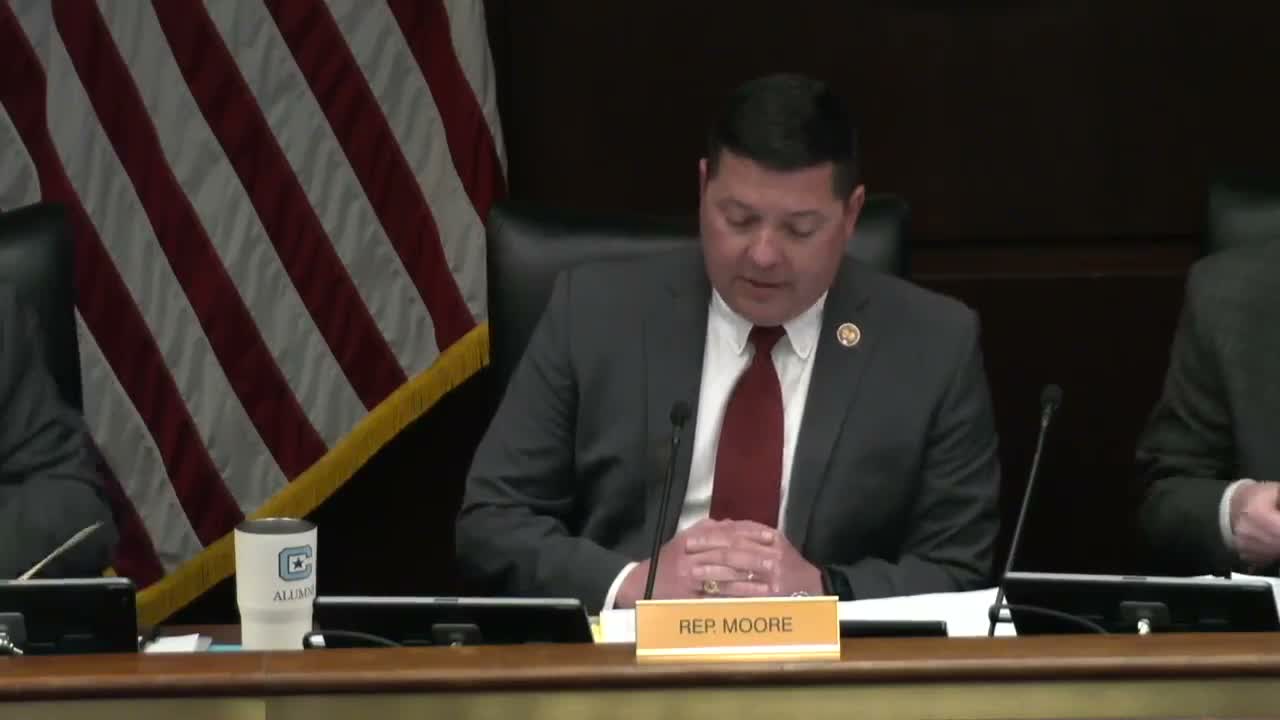
Summary
At a public hearing on House Bill 4764, dozens of witnesses—local residents, municipal officials, civil-rights advocates and small-business owners—urged lawmakers to reject a state mandate requiring local detention-operating agencies to enter written agreements with federal immigration authorities, citing civil‑liberties, fiscal and community‑trust concerns.
House members heard nearly three hours of public testimony on House Bill 4764, a measure that would require local law enforcement agencies that operate correctional facilities to enter written agreements with federal immigration authorities under 287(g)-style programs.
Representative Moore, chairing the Artificial Intelligence, Cybersecurity and Special Law Subcommittee, opened the session by summarizing the bill's key provisions: each participating agency must identify the federal program model it will use (jail enforcement, warrant-service officer, or task-force models), define scope and duration, set cost-allocation terms, file agreements or proof of attempts with the State Law Enforcement Division (SLED) and the attorney general's office, and accept SLED-provided training. The draft also includes immunity language for officers acting "in good faith" under a valid agreement and administrative penalties for noncompliance; the attorney general would have enforcement authority.
The hearing drew nearly exclusively opposed testimony from plaintiffs and community representatives who said the bill would harm public safety and community trust while imposing unfunded costs on local governments. "ICE agents have damaged property, and ICE agents have killed American citizens," testified Elaine Cooper, who urged the committee to reject H4764 because she believed the bill would "pave the way for decreased public trust in law enforcement with no improvement in public safety." Several witnesses pointed to high‑profile operations elsewhere and described fear among immigrant families, students and small‑business customers.
Speakers who identified organizational affiliations raised specific legal and fiscal concerns. Megan O'Malia said the bill's fiscal note conflicts with its text and described municipal survey results showing many jurisdictions lack long-term holding capacity; she characterized H4764 as "forcing an unfunded mandate" and cited multi‑million‑dollar annual costs associated with some 287(g)-style programs. Erica Wright of the Municipal Association of South Carolina urged adding municipal liability protections and warned the long-term costs of litigation are borne locally. The ACLU's Courtney Thomas warned of civil‑liberties harms and cited studies linking 287(g)-type agreements to increases in chronic absenteeism in some counties.
Witnesses also raised constitutional and accountability questions. Edward Mulligan said federal control over immigration could make parts of the bill vulnerable to preemption challenges and long litigation. Several speakers recounted incidents from other jurisdictions and urged the state to preserve local control over policing decisions, arguing that elected sheriffs are accountable to their communities.
Committee members asked detailed questions about how the three program models would operate in practice, how detainee processing and DHS queries intersect with bond hearings, and how long federal authorities have to pick up a person subject to a detainer (witnesses and members referenced the federal 48‑hour guidance for detainer pickups). Representative Govan and others pressed witnesses on whether the bill would effectively "federalize" local policing and on the bill's necessity given that some localities already voluntarily participate in 287(g)-type arrangements.
No committee vote was taken. Representative Moore closed by thanking the witnesses and staff and said the committee would not vote on the bill at this meeting; he invited staff to consider written testimony and potential revisions. A motion to adjourn was seconded and the subcommittee adjourned.
The record includes numerous claims and figures raised by witnesses that were not independently verified during the hearing, including a cited figure that "over 3,000 arrests were reported in 2025," reported local and out‑of‑state detention‑cost totals, and study results about average lengths of hold when people are transferred to ICE custody; the committee took the testimony and did not act on the bill at this session.
What happens next: the subcommittee did not vote on H4764 and said staff would review written submissions and consider potential revisions before any future vote.