Get Full Government Meeting Transcripts, Videos, & Alerts Forever!
Get email alerts on the Impeachment Inquiry topic
No spam. Unsubscribe anytime.
House subcommittee authorizes outside counsel to study whether solicitors can be subject to impeachment
Summary
The South Carolina House Constitutional Law Subcommittee voted to retain outside counsel to determine whether Article 15 of the state constitution allows an impeachment inquiry into a circuit solicitor tied to the 2023 Gerard Price case; public testimony warned such an inquiry could politicize prosecutions.
The South Carolina House Constitutional Law Subcommittee on Feb. 17 voted to retain outside counsel to study whether the House may lawfully pursue an impeachment inquiry into a circuit solicitor, and adjourned debate on a resolution that would start that inquiry.
Representative Pace, sponsor of House Resolution 45-64, told the panel the measure is meant to “start the process of investigating and then handing things over primarily to the senate,” and that the resolution’s primary focus is “the Gerard Price incident from 2023” and “the lack of propriety in making that deal” to release a convicted person early without notifying the victim’s family.
Solicitor Duffy Stone, who identified himself as the fourteenth-circuit solicitor and chairman of the South Carolina Prosecution Commission, urged the committee to stop, saying impeachment powers under Article 15 apply to statewide officials and judges and “it does not apply to solicitors.” Stone cited McDowell v. Burnet (92 S.C. 469) as authority and argued an inquiry risks turning prosecutorial decisions into “a popularity contest.”
Members asked how the committee would distinguish a preliminary "inquiry" from a full investigation and who would bear the cost. Representative Wetmore and others pressed the sponsor for specificity about the scope, possible limiting allegations, and procedures; Pace said the inquiry is intended to test constitutional authority and is not itself the investigatory stage.
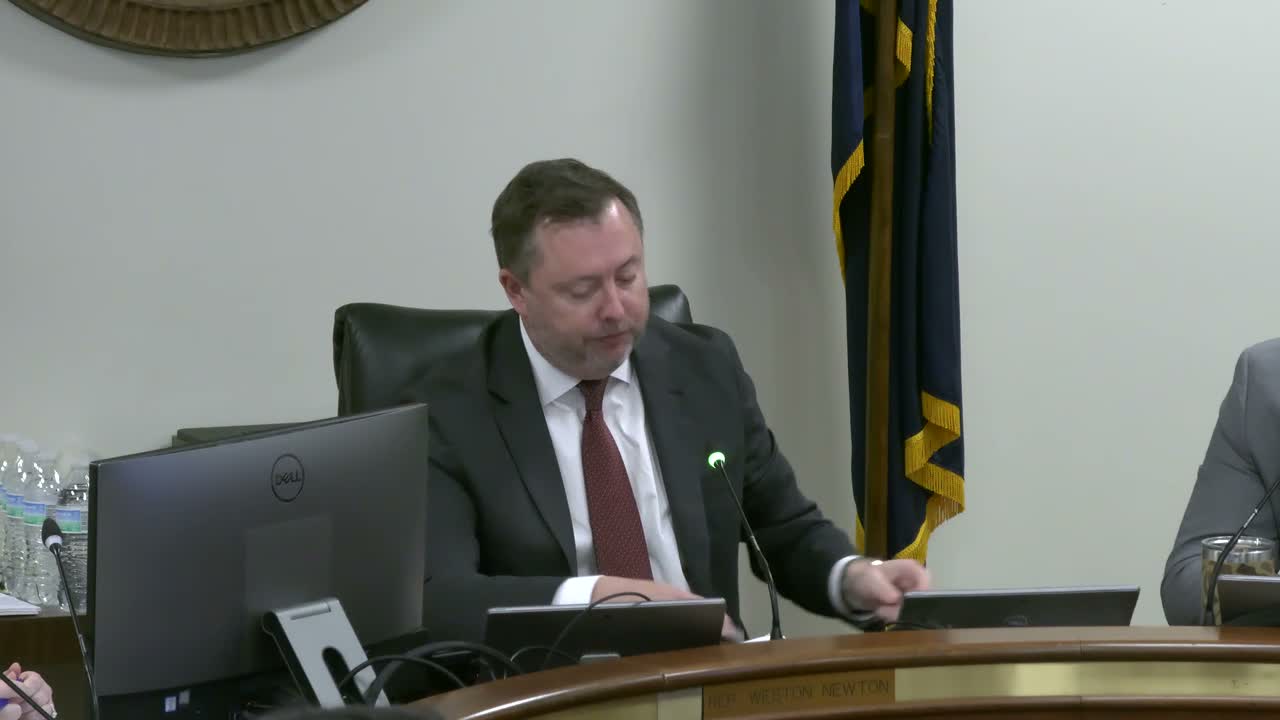
Chairman Newton moved that the House, in concert with the Speaker, retain former U.S. Attorney and ex-solicitor Walt Wilkins to investigate constitutional questions raised by the resolution and granted the chair authority under state code to assist with subpoenas and discovery. The motion passed on a voice vote and the subcommittee then voted to adjourn debate on H.R. 45-64.
Supporters of pausing the resolution noted existing oversight mechanisms — annual prosecution commission reports, prosecutorial ethical rule 3.8, the Office of Disciplinary Counsel and the S.C. Supreme Court — and warned that public inquiries could chill prosecution decisions or unfairly damage reputations. Representative Bamberg and others framed the timing as potentially influenced by recent political events; Pace said the sponsor delayed filing while waiting for executive action that did not occur.
The subcommittee’s action does not decide the constitutional question; it directs an outside counsel review and leaves the substantive resolution on H.R. 45-64 as an adjourned debate pending that review.