Get Full Government Meeting Transcripts, Videos, & Alerts Forever!
Get email alerts on the Building Codes topic
No spam. Unsubscribe anytime.
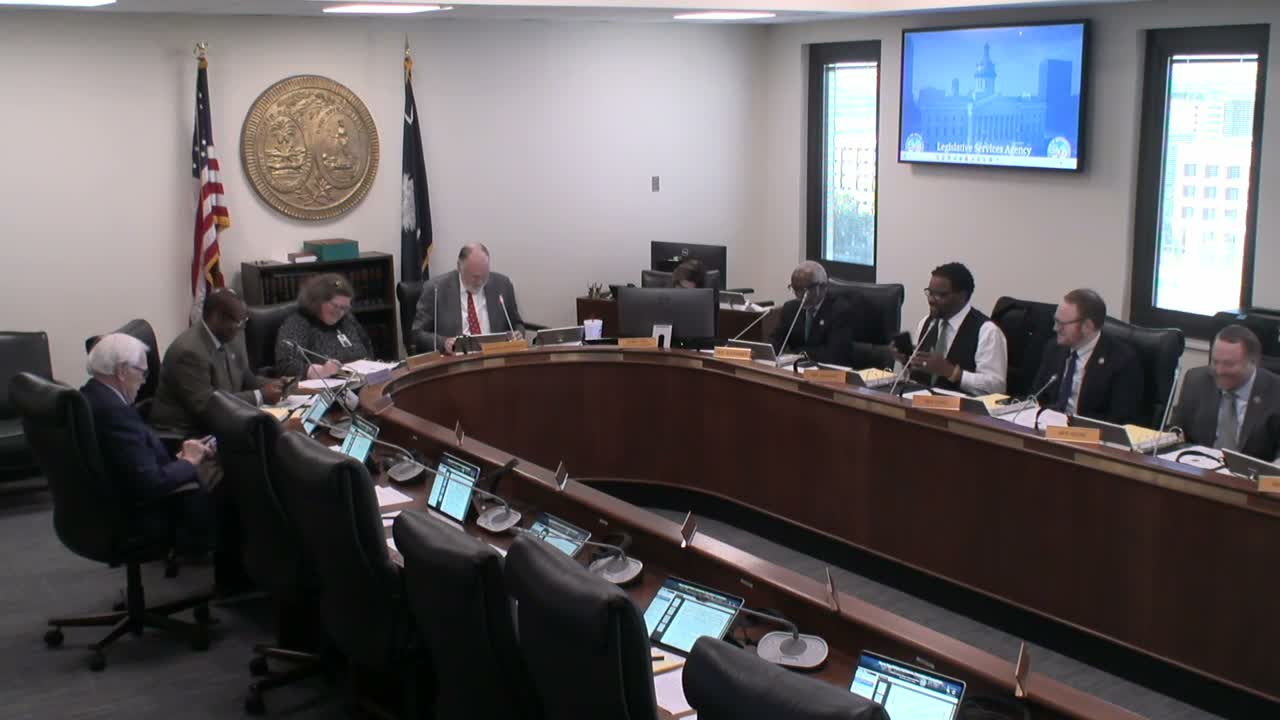
House committee approves package of building-code updates after debate over kitchen-hood enforcement and access roads
Summary
The House Regulations Administrative Procedure Committee approved a series of state code updates, including International Building Code and Fire Code modifications, after questioning about commercial kitchen hood-cleaning enforcement, appeals for businesses, and a reversion to a one-road apparatus-access standard.
The House Regulations Administrative Procedure Committee on Wednesday approved a suite of model-code updates covering building, fire, fuel gas, mechanical, plumbing and residential codes while pressing state officials on enforcement practices for commercial kitchen hood maintenance and on minimum apparatus access roads for subdivisions.
Maggie, a representative from the Labor, Licensing and Regulation (LLR) staff, told the committee most changes are continuations from prior cycles and are intended to add definitions and consistency; she said the modifications are minimum standards for new construction and would take effect on 01/01/2027. "These are the minimum construction standards," Maggie said, adding the rules would not apply retroactively.
The committee spent considerable time on the Fire Code, including the requirement that commercial hoods be inspected and cleaned according to the industry standard cited in the code. Nathan Ellis, assistant state fire marshal, said the fire code requires suppression systems and cleaning and that inspection frequency depends on cooking volume: "A waffle house that cooks 24 hours a day... is required to have a quarterly inspection of the hood," Ellis said. He described the standard referenced by the code as the International Kitchen Exhaust Cleaning Association guideline and said a business owner may self-inspect or hire a contractor. "We're not shutting anything down," Ellis said, adding the state generally intervenes only for imminent safety risks and that many enforcement steps and appeals occur at the local level.
Members pressed for remedies when locals appear to overreach. Ellis described two enforcement paths: the state fire marshal can intervene where local officials derive authority from the state, and local construction boards of appeals can overturn local decisions that are inconsistent with adopted codes. Representative Taylor urged a practical notification step for business owners: officials should be required to give clear appeal-and-contact information when an order is issued.
The committee also agreed to reverse a prior modification that had effectively required two apparatus access roads or a 26-foot single road for some small subdivisions; Ellis and Maggie said they restored the code to a one-road, 20-foot minimum for one- and two-family developments while leaving local jurisdictions free to impose stricter local zoning or subdivision rules.
Several documents were put to motions and votes during the meeting. Document 5424 (International Building Code modifications) was moved, seconded and recorded as approved by roll call. The Fire Code package (Document 5426) likewise was moved and passed. The committee voted to withdraw and resubmit a plumbing regulation related to water bottle filling stations in schools so the proposal can be revised; Representative Long had raised costs concerns.
Molly Price, LLR program director, offered a cautionary example about hood maintenance: she recounted that improper cleaning on one occasion led to a restaurant fire and prolonged closure for the business owner, who later appreciated quick intervention. "She would have much rather been closed for a day," Price said, arguing that enforcement and education together keep businesses and occupants safe.
The committee generally framed these code changes as industry-vetted updates intended to harmonize state rules with national model language while preserving local authority on land-use and access standards. Multiple documents relating to professional licensure (including fee adjustments for genetic counselors and new ethics language for anesthesiology assistants) were also considered and either approved or sent back for redrafting. The committee adjourned after completing the scheduled items.
The committee record shows motions, roll-call votes and several unanimous approvals; several regulations will be withdrawn and resubmitted for technical changes at staff request.