Lifetime Citizen Portal Access — AI Briefings, Alerts & Unlimited Follows
Subcommittee hears hours of testimony on bill to bar most gender-marker changes on birth certificates
Loading...
Summary
Lawmakers heard pro- and anti‑SB162 testimony on whether South Carolina should prohibit most changes to the gender marker on birth certificates; proponents argued the bill preserves vital‑statistics integrity and protects sex‑based spaces, while opponents warned of harm to transgender and intersex residents and likely federal court challenges.
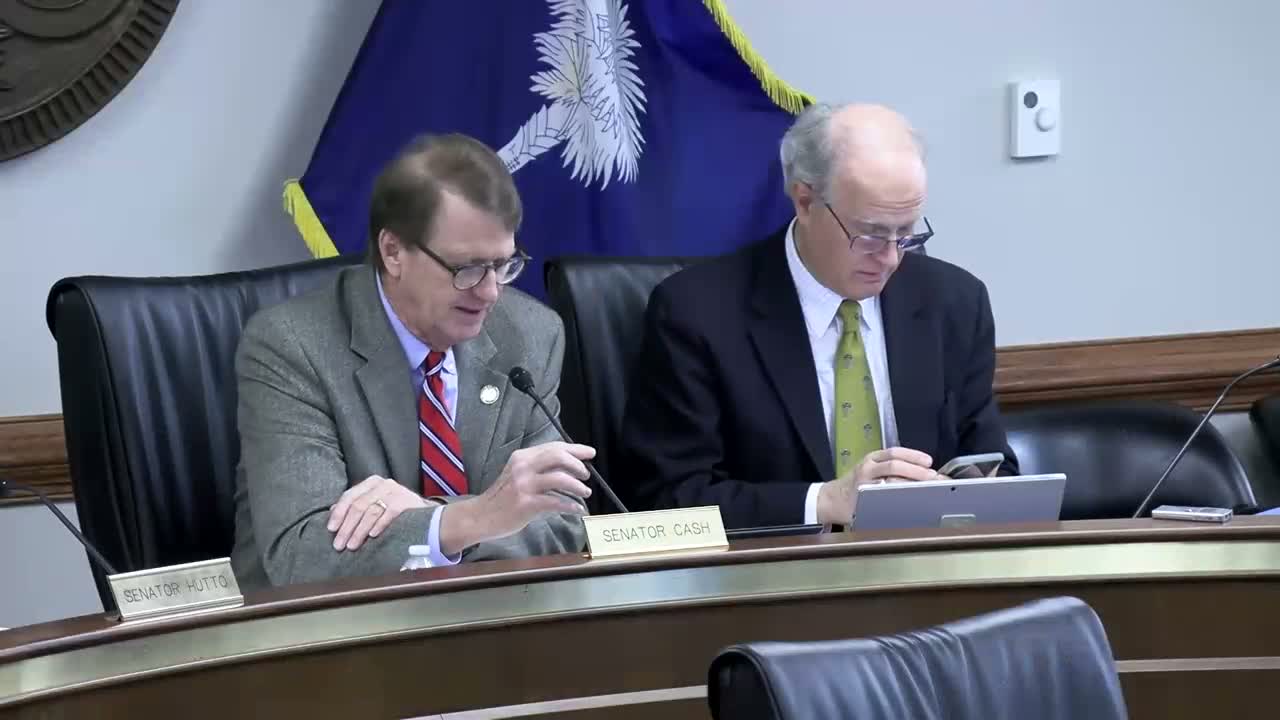
A South Carolina Senate subcommittee on Feb. 12 heard several hours of testimony on Senate Bill 162, a measure that would prohibit changes to the gender marker on birth certificates except for narrowly defined, medically verified disorders of sex development.
Proponents told the panel the bill is designed to preserve accurate vital records and protect women’s sex‑based rights. "Birth certificates serve a specific and important purpose. They record a historical fact," Miles Thompson, director of the South Carolina Catholic Conference, said, arguing the measure would "ground[] the definition of gender in objective biological reality." Erica O'Connell, legal counsel with Alliance Defending Freedom, said the legislation would provide uniform guardrails where she said state practice currently varies and could "skew" public‑health data if amended records were used inconsistently.
Opponents — including LGBTQ advocates, attorneys who handle birth‑record petitions, the ACLU of South Carolina, and pediatric and public‑health experts — urged the committee to reject SB162. Christina Picosi, executive director of the Harriet Hancock Center, said the bill "creates" a problem by denying transgender people the ability to correct their birth certificates, undermining privacy and safety. "When a birth certificate can't be updated, it creates a permanent mismatch between who someone is and what their government says about them," she said.
Legal issues were a central thread of the hearing. Sam Kennedy, a staff attorney with the ACLU of South Carolina, warned that a categorical ban on updates would put the state on a "collision course with binding federal precedent," citing Fourth Circuit decisions he said treat classifications tied to sex assigned at birth as triggering heightened constitutional scrutiny. Lauren Edwards, an attorney who represents clients seeking corrections, described the current family‑court petition process as costly and uneven, and said Department of Public Health guidance that once eased burdens was previously vetoed by the legislature.
Medical testimony emphasized that some biological conditions related to sex development can be complex and not evident in infancy. Dr. Elizabeth Mack of the South Carolina chapter of the American Academy of Pediatrics said the state has about 58,000 live births annually and estimated that 0.02–0.05% of infants (roughly 12–29 a year) are born with ambiguous genitalia; she added that roughly 1.7% of births may have differences in sex development identified later in life.
Committee members pressed witnesses on practical effects the bill would have on downstream uses of identity documents, on whether amended certificates currently note what element changed, and on whether federal reporting or hospital practice could be affected. Proponents argued that uniform statutory definitions are needed to avoid administrative discretion; opponents said the bill would deny a small but vulnerable population access to corrected identity documents and could increase safety risks for those people.
The subcommittee recessed for the floor session and asked Department of Public Health Vital Records staff to return to answer technical questions at a later time. No votes or formal amendments were taken at the Feb. 12 session.