House committee hears multi‑bill housing package aimed at boosting supply by easing certain zoning and procedural requirements
Loading...
Summary
Lawmakers and supporters testified on a housing‑readiness package that would limit repeated study requests, raise protest‑petition thresholds (to 60%) and expand notice to 300 feet, and set lot‑size standards in denser MSAs; committee heard broad stakeholder support and questions about statewide fit.
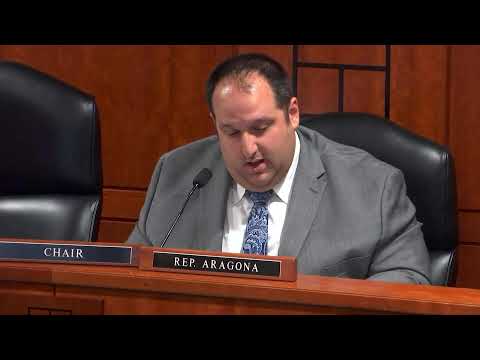
The House Regulatory Reform Committee heard a multi‑bill housing package from Representatives Aragona and Grant that sponsors said is intended to increase housing supply by modernizing zoning and procedural requirements while preserving local input.
Rep. Aragona said the package addresses rising housing costs and regulatory burdens, and noted several bills in the package were developed with bipartisan input. Rep. Grant said the reforms focus on supply constraints tied to outdated local rules and described three bills the committee discussed in detail: a study‑requirements bill to limit repeated or late study demands, a protest petition reform bill (expanding notice from 100 to 300 feet and raising the petition threshold from 20% to 60% of nearby property owners), and a lot‑size bill that would set different minimum lot sizes in the state’s densest metropolitan areas.
Supporters included Erica Farley of the Rental Property Owners Association of Michigan, Lauren Strickland and Joel Arnold of Abundant Housing Michigan, Christine Simon of the Grand Rapids Chamber, Sean Cecil of the Michigan Realtors, and Jared Skorup of the Mackinac Center for Public Policy. Testimony highlighted older housing stock, restrictive minimum lot sizes (some communities requiring 7,000–15,000 square feet), and unpredictable review processes that can add time and tens of thousands of dollars in study costs. Abundant Housing said the package aligns with reforms seen in other states and would make it easier to build ‘middle housing.’
Members pressed sponsors for data and geographic targeting. Rep. Regas and others asked for the methodology behind widely cited shortage figures; sponsors and witnesses referenced estimates on the order of roughly 119,000 to 150,000 homes needed statewide but agreed MSHDA provides the technical calculation. Rep. Wozniak and others asked whether a single standard fits rural and metro areas; sponsors pointed to a map showing the measures apply to denser MSAs, not to all communities.
On process, Rep. Grant explained site‑plan timing changes: an initial 30‑day review to identify missing information and a 60‑day limit for final review, after which the municipality must approve or deny with a clear statement of reasons. Supporters urged the committee to move the package forward; local government groups (MML, MTA) were noted as stakeholders who received draft language but not all engaged earlier in the drafting process. The committee did not finalize votes on the housing package during this hearing; members signaled additional discussion in future sessions.