Get Full Government Meeting Transcripts, Videos, & Alerts Forever!
Get email alerts on the Theater Stage Memorandum topic
No spam. Unsubscribe anytime.
Teachers, students and parents urge board to oppose county's new theater-stage permitting rules
Summary
Dozens of theater teachers, students and parents told the Prince William County School Board that a new county risk-management memorandum requiring permits and licensed contractors for temporary stages will make high school theatrical sets unaffordable and delay productions, and asked the board to advocate for an internal review or self-permitting process.
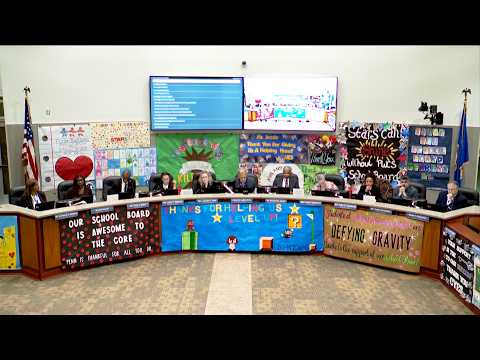
Dozens of theater educators, students and parents told the Prince William County School Board on Feb. 18 that a newly issued county memorandum requiring permits and licensed-contractor construction for temporary stages threatens school theater programs.
"Platforms are not a decorative extra. They are essential to theater performance," Jessica Rodriguez Snellings, a Gainesville High School theater teacher, told the board, citing permit fees and engineering costs that she said make platforms unattainable for many schools.
Speakers described the memorandum's practical effects: platforms higher than 16.5 inches or larger than 120 square feet that hold 10 or more people would require county permitting, a process several witnesses said can take four to six months. The speakers also cited direct costs: a $1,500 permit fee, a $2,275 resubmittal fee, and an additional fee equal to 2% of the project's value, plus the expense of outside engineers or contractors and prefabricated platforms.
Student speakers said the policy would remove hands-on learning that prepares them for college and careers. Anders Parker, a Woodbridge Senior High student and former scenic designer, said the restriction "has a nearly identical effect on high school theater companies as a strict ban on sets above the height of 16 and a half inches would." Several teachers and parents said the new rules are out of step with regional district practices and national theater-safety standards.
Teachers asked the school board to press the Prince William County Board of Supervisors for an alternative: an internal review process, a self-permit or a school-dedicated theater position to oversee safety and compliance. "We are not asking to eliminate oversight or ignore risk, but we are asking for reasonable, educationally sound expectations consistent with other counties," Parker Hallman, a teacher, said.
Board members responded that the division is sympathetic and that some regulatory constraints come from county and state code. Board member Justin Wilk urged teachers and parents to meet the county supervisors and said he would join them in advocacy. Chair Doctor Lateef said the board will discuss the issue with county and state colleagues and acknowledged the division is "aware of the issue." The board did not take formal action at the meeting.
Next steps: teachers asked the board to advocate for a county-level change or a theater-specific path that preserves safety without blocking educational construction; board members pledged follow-up conversations with county supervisors and staff.