
Residents urge county to press ADEQ after antimony, selenium exceedances tied to South32 discharge
Get AI-powered insights, summaries, and transcripts
Sign Up Free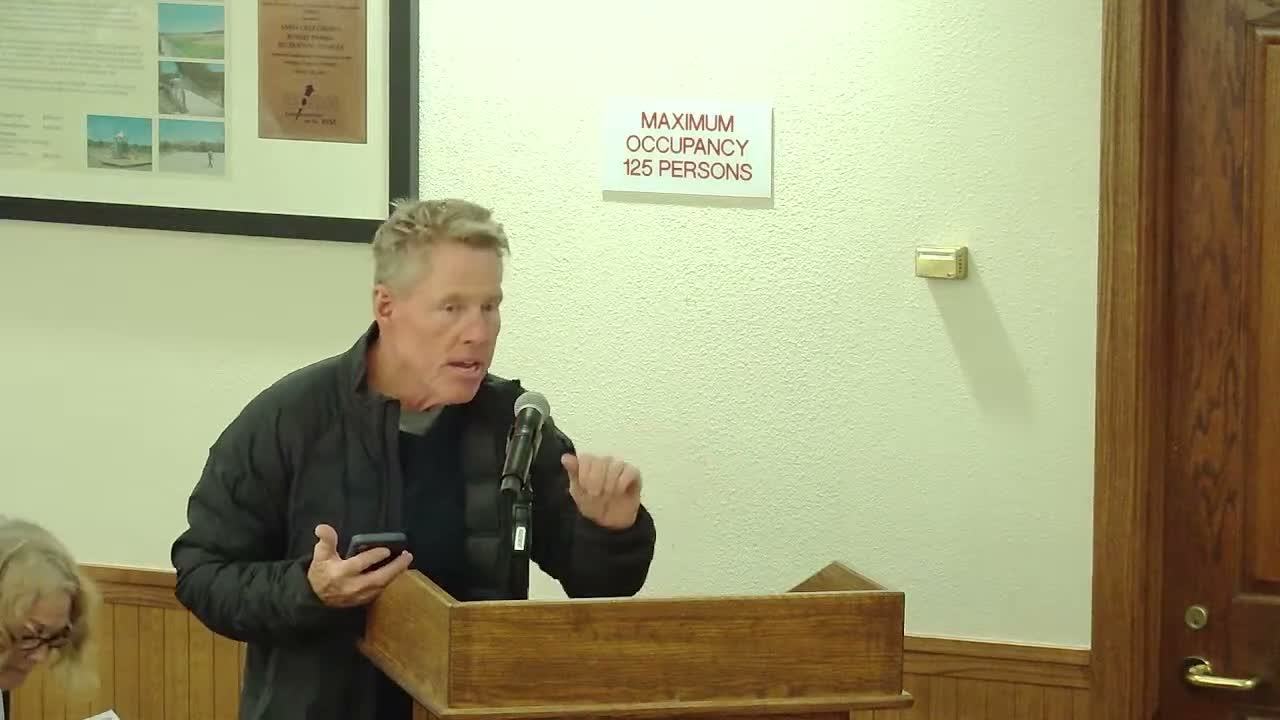
Summary
Residents and local scientists told the Santa Cruz County Board of Supervisors that monitoring and reporting around South32's discharge have been inadequate, urging the county to press the Arizona Department of Environmental Quality to reopen the aquifer protection permit and require more frequent monitoring and independent review.
Residents and citizen scientists urged the Santa Cruz County Board of Supervisors to press state regulators after repeated antimony and selenium exceedances allegedly tied to a South32 discharge.
At the board's public-comment period, Hunter Williams read a prepared statement that said an antimony reading of about 12 parts per billion was found in a private well downstream and that selenium concentrations spiked to 7 parts per billion in December, above the quoted discharge limit of 2 ppb. Williams, reading a statement submitted for the record, said "the concentration of antimony . . . remains high above the drinking water standard" and urged the county to request that ADEQ reopen the aquifer protection permit and add monitoring wells along Harshaw Creek.
Community members pressed several related points. Chris Werkhoven raised air-quality concerns about ADEQ's recent permit for the Hermosa mine, alleging that some modeling steps and inputs understated potential lead-compound dispersion and asking the board to object to the draft environmental analysis and to seek an independent expert review. Robin Lucky, president of the Calabasas Alliance, said citizen scientists found that South32 was late to report antimony exceedances and asked the county to demand a reapplication or reopening of the permit only after protective measures are identified. Chuck Klingenstein asked whether the county's study-session review had sufficiently examined the risk of mobilizing legacy mining contamination and urged a strong Community Benefits and Protections Agreement to protect the county over the long term.
Those who testified cited a mix of specific technical concerns and procedural gaps: alleged underreporting or late reporting of exceedances, model inputs used in dispersion calculations, lack of public notification when limits were exceeded, and the need for more frequent monitoring than monthly sampling. Several speakers asked the county to support a dye-tracer study and to hire or require an Arizona-registered hydrogeologist to analyze monitoring data.
Board members did not take formal action on the requests at the meeting; the issue subsequently moved into a closed executive-session discussion under the agenda's legal-consultation item. The public record at the meeting shows strong local concern about monitoring frequency, reporting practices, and the content of a forthcoming Community Protection Benefits Agreement that many speakers said should include long-term protections for water and sediment in Harshaw Creek.
What happens next: speakers asked the board to send formal letters to ADEQ and the U.S. Forest Service and to require independent expert review; the board convened an executive session later in the agenda for legal consultation regarding the CPBA and related agreements.