Get Full Government Meeting Transcripts, Videos, & Alerts Forever!
Get email alerts on the Housing Finance topic
No spam. Unsubscribe anytime.
Senate committee hears proposal for mixed-income revolving loan fund to accelerate housing construction
Summary
The Senate Committee on Housing and Development heard testimony supporting Senate Bill 15 67, which would direct Oregon Housing and Community Services to stand up a mixed-income development revolving loan fund to provide short-term, below-market construction loans to spur mixed-income housing projects; fund design, subordination to primary lenders and funding sources drew detailed questions from senators and stakeholders.
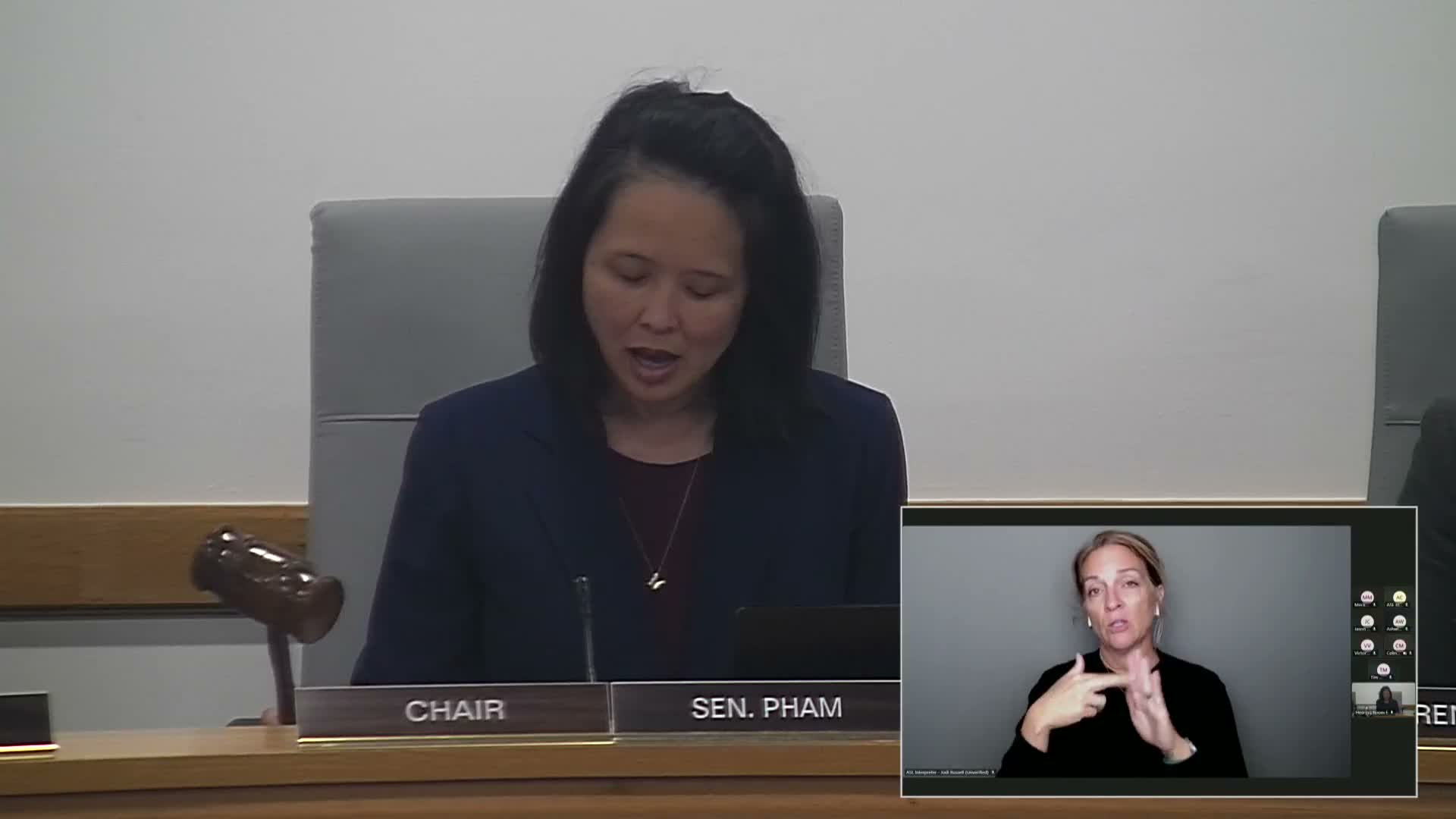
Sen. Khan Pham, chair of the Senate Committee on Housing and Development, introduced Senate Bill 15 67 on Feb. 3, 2026, saying Oregon must increase housing production and that the bill would create a Mixed Income Housing Development Fund to provide short-term, below‑market construction loans to mixed‑income projects.
"We need to build more homes to house more people," Pham said, framing the measure as one tool to boost production without relying solely on federal low‑income housing tax credits.
Housing finance experts, OHCS staff and private‑sector representatives described how a revolving construction loan fund can lower the cost of capital and help stalled projects move forward. Ashwin Warrior, director of housing at the Center for Public Enterprise, summarized results from other states and said the model "reduces the overall cost of capital for a developer, which leads to directly lowering the required rents for a project to pencil," and that funds are most effective when layered with other programs.
Natasha Detwiler Davey, director of affordable rental housing at Oregon Housing and Community Services, told the committee OHCS envisions a flexible, short‑term program that would set projects into stability and return resources to the fund for future projects. On program structure, OHCS said the state would typically take a subordinate lending position to primary construction lenders so the primary lender retains first‑position controls during construction risk events.
Committee members pressed panelists on program mechanics, including how much of a project the fund would cover and the expected repayment window. Witnesses and advocates discussed options such as: limiting the state's share of the financing stack to a mezzanine portion (panelists cited illustrative ranges around 20–30% of project costs in some proposals); establishing short construction‑period terms with a brief stabilization refinance; and using credit enhancements or first‑loss pools to leverage greater private capital. Diego Diaz and other witnesses proposed a shorter term (six months to a year) or first‑loss credit pools to multiply leverage of state dollars.
Banking representatives emphasized the importance of clear subordination language and underwriting coordination. Kevin Christiansen of the Oregon Bankers Association said discussions about whether subordination language should be mandatory or permissive were ongoing. OHCS staff and industry witnesses also described options to seed programs using state treasury deposits or CDFI intermediaries as precedents exist in other states, though OHCS cautioned that bond financing would bring repayment obligations that complicate revolving, subordinate lending.
No committee vote on SB 15 67 occurred during the hearing. Chair Pham closed the public hearing after receiving testimony and questions and asked staff to incorporate the technical and operational suggestions offered by advocates, banks and housing providers.
The committee invited written comments and indicated further amendments or drafting changes could follow as stakeholders and OHCS refine underwriting, subordination and funding‑source details.