Get Full Government Meeting Transcripts, Videos, & Alerts Forever!
Get email alerts on the Sb1532 Omnibus topic
No spam. Unsubscribe anytime.
Senate committee hears SB 15 32 omnibus on long‑term care rules, cameras and developmental disability rates
Summary
The Oregon Senate Committee on Human Services held a public hearing on SB 15 32, an omnibus bill that would alter immediate‑jeopardy enforcement in care facilities, require a model consent form for in‑room cameras, and direct rate‑model changes for live‑in direct support professionals; agencies and stakeholders sought technical edits and a narrow fix for out‑of‑state placement rules.
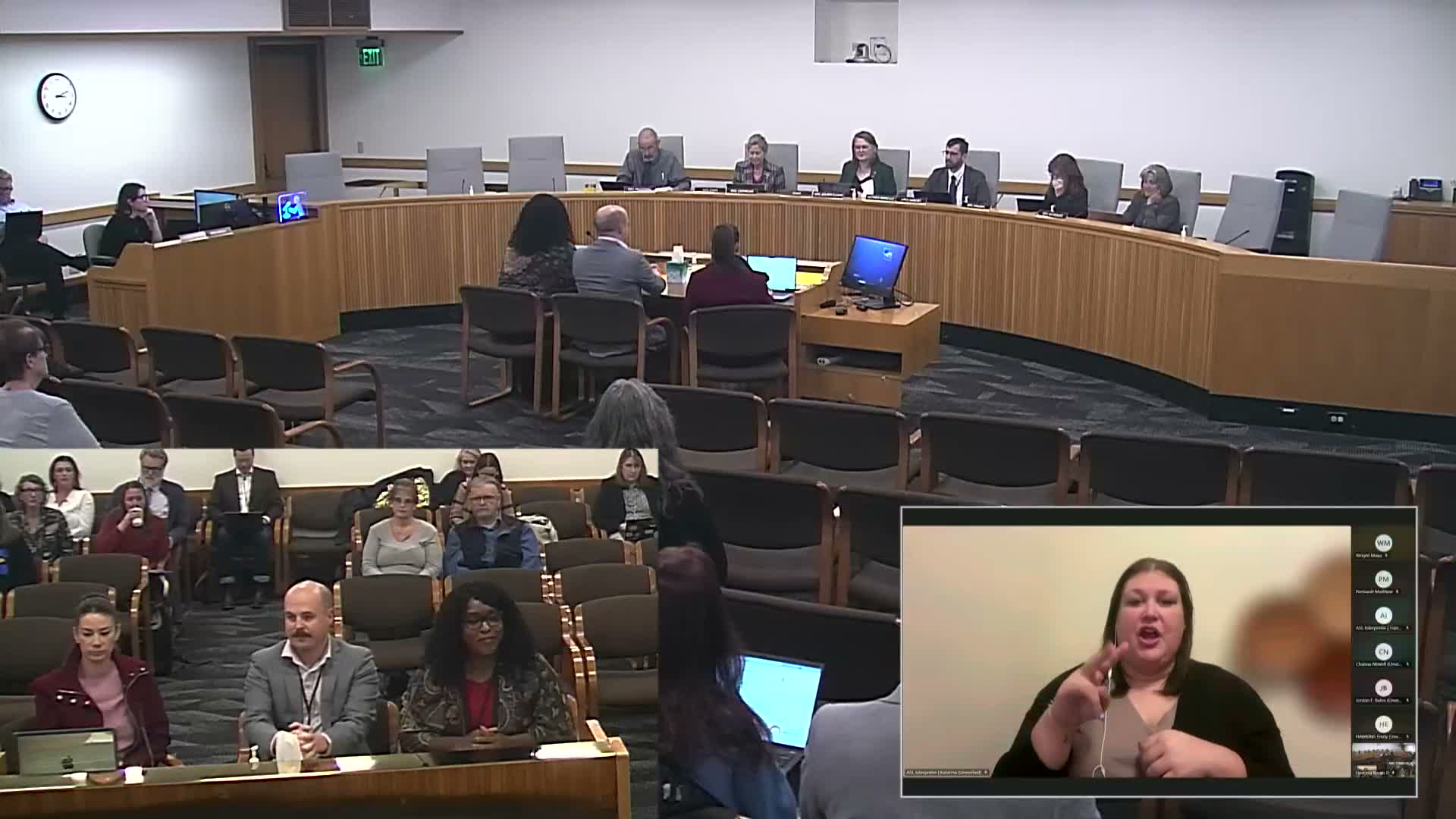
The Oregon Senate Committee on Human Services heard public testimony Feb. 3 on Senate Bill 15 32, an omnibus measure that would change oversight and administrative requirements across long‑term care, developmental disability services and child placements.
Dr. Nikisha Nycoyle, director of the Office of Aging and People with Disabilities at the Oregon Department of Human Services, told the committee the department can "easily implement" a model consent form for in‑room cameras but does not interpret the bill as creating a duty for the agency to monitor or enforce camera use without additional resources. "If we were asked to do that, we would request resources from the legislature to do so," Nycoyle said.
The bill also proposes changes intended to narrow when ODHS may impose a condition on a care facility license after a finding of "immediate jeopardy." Libby Battlin of the Oregon Health Care Association said the dash‑2 amendment would define a "preliminary finding of immediate jeopardy," give facilities a chance to present information during initial investigations and tie criteria for license conditions to longstanding Centers for Medicare & Medicaid Services frameworks. "If we can make that change, we've done what we needed to do with this provision," Battlin said.
Darlene O'Keefe of the Office of Developmental Disability Services said Section 6 would direct ODDS to adjust hourly attendant‑care rate models when a direct support professional lives with the person served. ODDS estimated about 30 percent of hours are worked by live‑in DSPs and told the committee such a rate change could yield up to $10,000,000 in general‑fund savings for the 2027–29 biennium while prohibiting reductions in worker pay as a result of a lower agency rate.
Margaret Carey, Medicaid medical director at the Oregon Health Authority, and Chelsea Holcomb, OHA behavioral health director, urged the committee to refine Section 9, which addresses access to eating‑disorder treatment programs. Carey warned that creating a distinct "eating disorder" residential program could duplicate or conflict with existing psychiatric residential treatment program (PRTF) pathways covered under the EPSDT benefit; OHA recommended changing the language to allow "inpatient or residential treatment facilities" to preserve access to medically necessary comprehensive care.
Stakeholders including the state long‑term care ombudsman and provider groups said the dash‑2 amendment was the product of recent stakeholder work and generally narrows an impactful enforcement tool so it can be used more deliberately. "License conditions are a significantly impactful tool and we try to use them sparingly," Nycoyle said; Battlin added the amendment would better align statute with provider quality‑improvement processes.
Committee members pressed agencies on fiscal and implementation details. The chair asked for follow‑up on a single‑word drafting issue in a posted amendment and urged agencies to return proposed technical language quickly because the short session leaves limited time for drafting and reviews.
The committee closed the public hearing on SB 15 32 and carried over public testimony on SB 15 34; no final action on SB 15 32 was taken at the hearing.