Get Full Government Meeting Transcripts, Videos, & Alerts Forever!
Get email alerts on the Committee Organization topic
No spam. Unsubscribe anytime.
Senate Natural Resources & Wildfire committee adopts rules, hears four bills on vets, public lands, home hardening and salmon credits
Summary
The Senate committee adopted routine rules and held public hearings on SB 1539 (cattle pregnancy technicians), SB 1590 (limits on state/local assistance for federal land transfers), SB 1551 (homeowner authority for fire‑hardening despite HOA rules) and SB 1584 (salmon credit pilot). No floor or committee votes on the bills were taken.
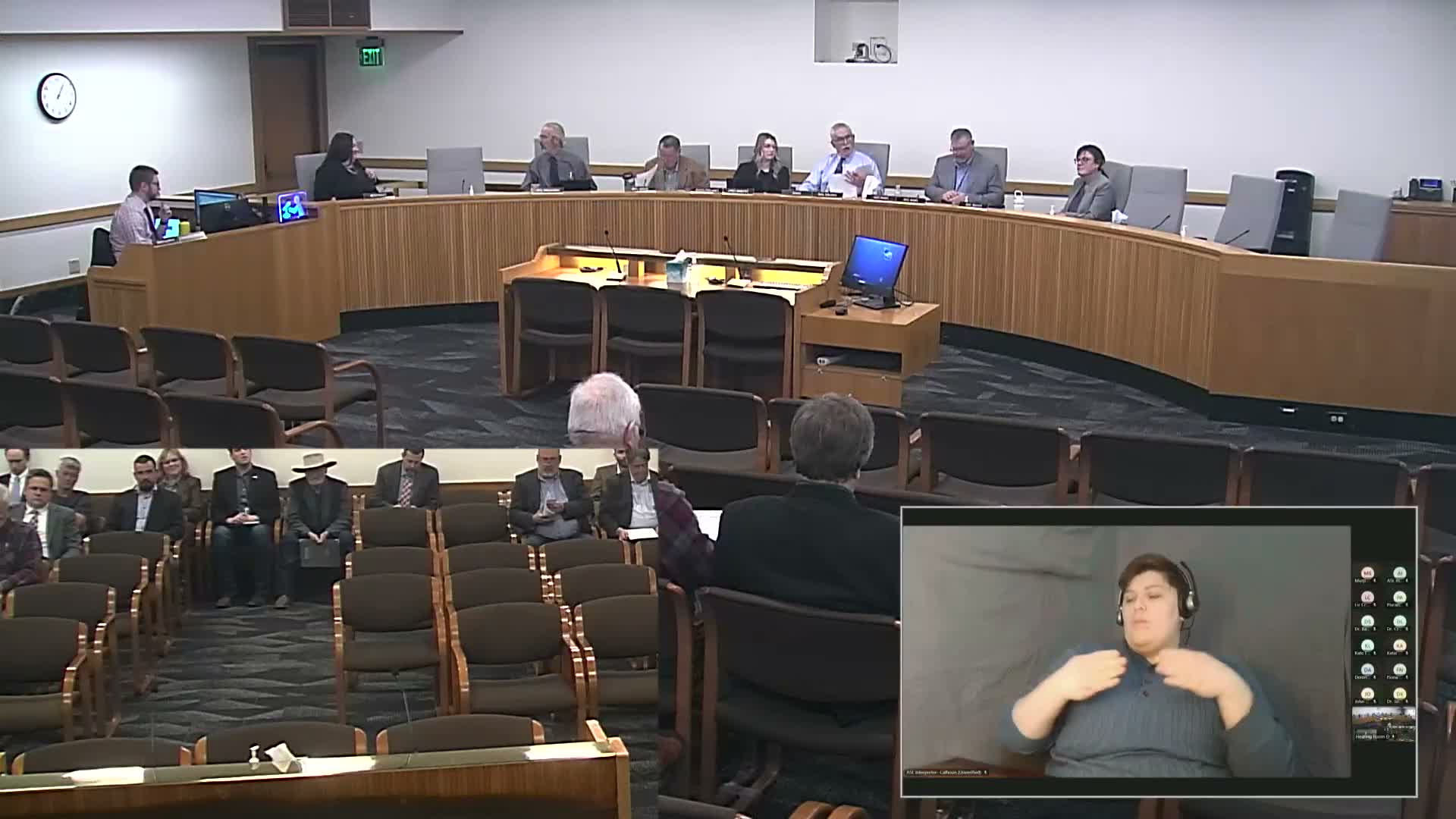
Chair Golden opened the Feb. 3, 2026 meeting of the Oregon Senate Committee on Natural Resources and Wildfire and warned members and witnesses that the committee faces a compressed two‑week schedule for hearings and amendments.
The committee adopted its proposed organizational rules following a motion by Senator Nash; Senators Van Bauchke, Fahey and Nash recorded ‘Aye’ on the roll call and the chair announced the rules adopted. The adoption was procedural and the rules apply across committee operations.
The panel then heard four public hearings. SB 1539 would authorize trained individuals without veterinary licenses to perform cattle pregnancy verification under specified education requirements; the sponsor, Vice Chair Senator Nash, and agricultural groups argued the measure would address shortages of large‑animal veterinarians in rural Oregon, while the Oregon Veterinary Medical Association and several practicing veterinarians warned it could weaken the veterinarian‑client‑patient relationship and reduce disease surveillance. Senator Nash indicated a -1 amendment would shift rulemaking authority from the Department of Agriculture to the Oregon Veterinary Medical Examining Board.
SB 1590, the sponsor called the 'Public Lands Promise,' would bar state and local public bodies from spending resources to assist federal agencies in transferring certain federal lands to private parties; the sponsor, Senator Anthony Broadman, described narrow exemptions for conservation purposes and proposed changing the sunset date; conservation groups testified in support while some legislators queried ambiguous language and potential impacts on co‑management and wildfire mitigation partnerships.
SB 1551 would allow homeowners to install or remove fire‑hardened materials even where homeowners association rules would otherwise prohibit them provided certain cost and timing limits. Sponsor Senator Sarah Gelster Bleuen framed the bill as a narrowly‑tailored home‑hardening measure for wildland‑urban interface neighborhoods; 1,000 Friends of Oregon supported it, while HOA representatives cautioned about replacement language, the 10% cost cap, and shared‑fence disputes.
SB 1584 would establish a Salmon Credit Pilot Program through the Department of State Lands and ODFW to incentivize private landowner restoration and mitigation. Supporters described new incentives for landowners in the Coos and Coquille watersheds; restoration and fisheries groups raised concerns about mitigation offsets across watersheds, proximity standards, and startup budget needs.
Chair Golden closed each public hearing and invited written testimony to be submitted through the OLISS portal by the posted deadline. No committee votes were taken on any of the bills that day; several sponsors signaled intent to work amendments before deadlines.